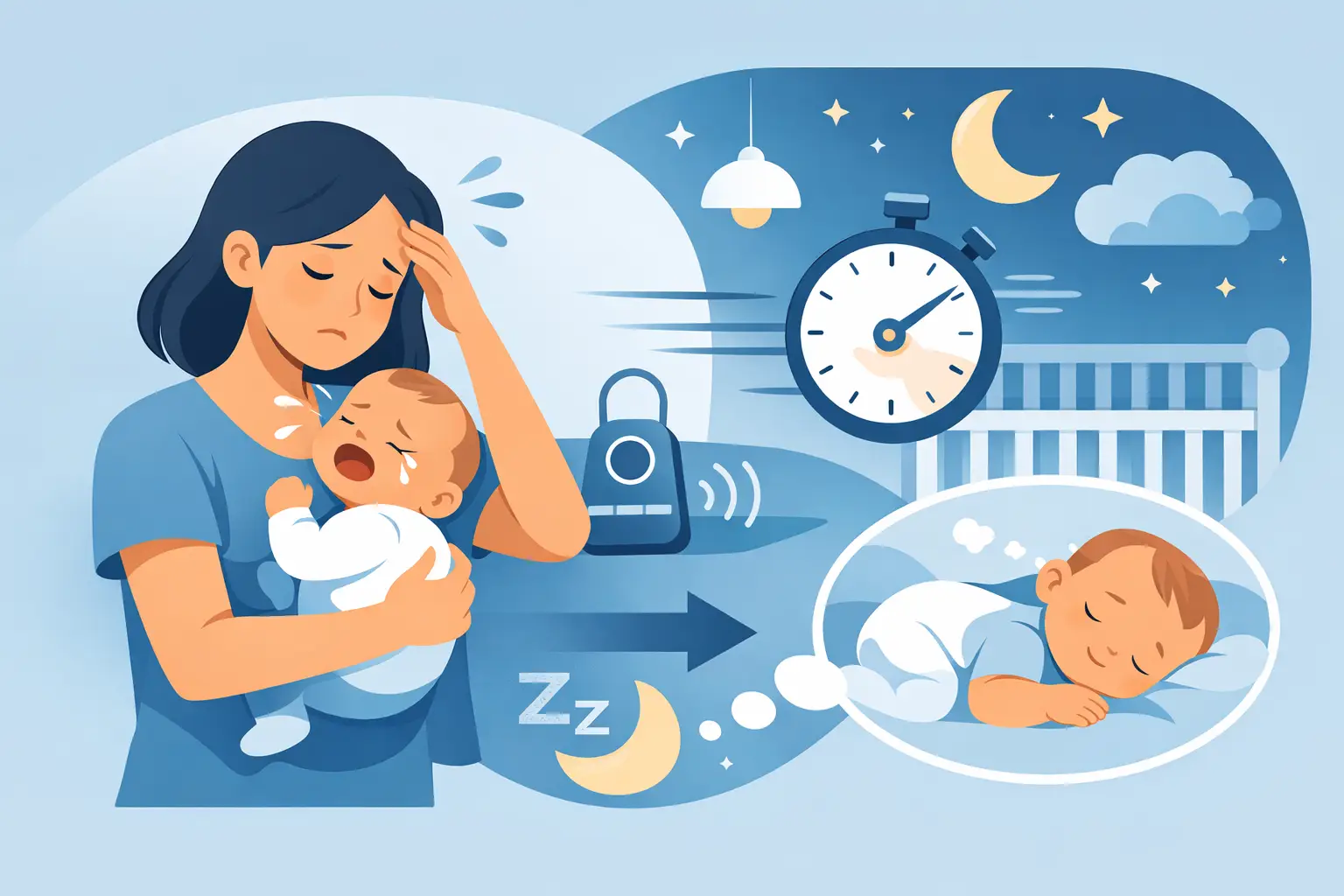
It’s 2:13 a.m., your baby is wide awake again, and every soft tip you’ve read online feels useless. If you’re searching for baby won’t sleep solutions, you do not need more vague reassurance. You need to figure out why your baby is fighting sleep, what to change first, and which fixes actually work tonight.
The hard truth is that most sleep struggles are not random. They usually come from a small group of problems: overtiredness, under-tiredness, inconsistent timing, sleep associations, discomfort, or a mismatch between your expectations and your baby’s developmental stage. Once you identify the real trigger, sleep gets easier much faster.
Why most baby won’t sleep solutions fail
Parents often try everything at once – a later bedtime, more feeding, more rocking, less rocking, longer naps, shorter naps. That creates noise instead of clarity. Sleep improves when you make targeted changes based on patterns, not panic.
A newborn who wakes every two hours has a very different sleep problem than a four-month-old who only falls asleep while being bounced. A six-month-old taking 20-minute naps may be overtired, while a ten-month-old fighting bedtime may need a schedule shift. The fix depends on age, timing, and the exact way your baby is resisting sleep.
That’s why generic advice feels so frustrating. It skips the diagnosis step.
Start here: identify the real sleep blocker
Before changing your routine, look at what happens in the hour before sleep and in the first wake-up after bedtime. Those two windows reveal a lot.
If your baby cries hard, arches, rubs eyes, and melts down before bed, overtiredness is a likely culprit. If your baby is alert, playful, and treating bedtime like a party, the issue may be under-tiredness or too much daytime sleep. If your baby falls asleep quickly in your arms but wakes the second you transfer them, you are likely dealing with a strong sleep association. If your baby wakes frequently with squirming, gas, congestion, or obvious discomfort, physical needs may be driving the pattern.
Parents at their breaking point often assume the baby “just hates sleep.” That is almost never the full story. Babies resist sleep when their body or routine is working against them.
The fastest baby won’t sleep solutions to try tonight
If you want immediate traction, do not overhaul your entire day. Fix the highest-leverage issues first.
Move bedtime earlier, not later
This is one of the biggest mistakes exhausted parents make. When a baby is fighting sleep, many parents push bedtime later hoping the baby will be more tired. Often the opposite happens. An overtired baby gets a second wind, stress hormones rise, and falling asleep becomes much harder.
If your baby has been melting down at bedtime, try moving bedtime 20 to 40 minutes earlier for the next three nights. Watch for easier settling, not perfection. An earlier bedtime often improves night sleep and early naps because it lowers the overtired cycle.
Stop stretching wake windows “just a little longer”
Sleep pressure matters, but so does timing. If your baby is staying awake past their sweet spot, you may be missing the easiest chance for smooth sleep.
For newborns, wake windows are very short. For older babies, they lengthen gradually, but not evenly across the day. The last wake window usually needs the most attention. Too short and your baby is not ready for bed. Too long and you get chaos.
If sleep has been a battle, track just one thing for two days: how long your baby stays awake before each nap and bedtime. You are looking for patterns, not perfect math.
Separate feeding from the final moment of sleep
Feeding to sleep is not automatically wrong. It becomes a problem when it is the only way your baby can connect sleep cycles. If your baby wakes every time they move from light sleep to deeper sleep and needs the same feeding setup to go back down, that is a dependency issue, not a hunger issue every single time.
A smart first step is not to eliminate the feed. Just move it earlier in the routine by 10 to 15 minutes so your baby finishes feeding before becoming fully asleep. That small shift can reduce repeated wake-ups without forcing a harsh approach.
Fix the sleep environment
You do not need a complicated nursery setup, but the basics matter. A dark room, consistent sound, and a cool comfortable temperature remove distractions that keep a baby partially alert.
If naps only happen in motion, at least one crib or bassinet nap attempt each day helps build familiarity. If nights are chaotic, make the room darker than you think it needs to be. Many babies who seem “bad at sleep” are simply too stimulated.
When your baby falls asleep but won’t stay asleep
This is where many parents get stuck. Bedtime may look successful, but then the wake-ups start every 45 minutes or every two hours.
Shortly after bedtime, false starts often point to overtiredness. Your baby goes down, sleeps one cycle, then wakes crying because the body is too activated to stay asleep. An earlier bedtime usually helps more than adding another nap late in the day.
Frequent wake-ups all night can mean hunger, habit, or both. Age matters here. A younger baby may still need overnight feeding. An older baby who is growing well and waking in a predictable pattern may be waking from learned expectation. The difference is important because the wrong response keeps the cycle going.
If your baby is old enough that every wake-up is unlikely to be true hunger, pause before responding the exact same way every time. Give 60 to 90 seconds. Some babies grunt, fuss, or briefly cry while transitioning sleep cycles and then settle. Jumping in too fast can accidentally turn a partial wake into a full wake.
Gentle sleep training without cry-it-out
You do not have to choose between doing nothing and listening to hours of crying. Gentle sleep training works best when you stay consistent and make one clear change at a time.
Start by choosing the strongest sleep association to reduce. Maybe that is rocking for 20 minutes, replacing the pacifier seven times, or feeding all the way to sleep. Keep the bedtime routine calm and repeatable, then reduce your help gradually instead of all at once.
For example, if you currently rock fully to sleep, rock until very drowsy, then place your baby down and offer steady reassurance in the crib. Expect protest. Protest is not the same as panic. The goal is not zero crying. The goal is helping your baby learn a new skill with support.
This is where many parents quit too early. Night one may be messy. Night three often looks different. Consistency beats intensity.
What to do if naps are the real problem
Bad naps create bad nights. A baby who naps in scattered 20-minute bursts often reaches bedtime already depleted.
If naps are short, first check wake windows. A nap that starts too late often stays short. Next, protect the first nap of the day. It usually has the strongest biological drive and gives you the best chance to practice independent sleep in a crib or bassinet.
Do not try to fix every nap at once. Rescue one nap if needed with contact, rocking, or motion so your baby does not become massively overtired by afternoon. That trade-off is practical, not lazy. Better daytime sleep often creates faster night improvement.
When sleep problems need a closer look
Sometimes sleep resistance is more than routine. If your baby has reflux symptoms, persistent congestion, eczema flares, snoring, feeding issues, poor weight gain, or inconsolable crying, it makes sense to check in with your pediatrician. A schedule tweak will not solve pain.
It also helps to reset expectations by age. Newborn sleep is fragmented. Regressions happen around developmental leaps. Teething can disrupt a few nights, though it is often blamed for much longer problems than it actually causes. Be honest about what is a phase and what has become a pattern.
The best strategy is the one you can repeat
Parents often look for the perfect method, but the winning method is the one you can apply consistently while exhausted. If a routine takes 90 minutes and five complicated steps, it will collapse under real life. If a plan is simple enough to repeat tonight, tomorrow, and three nights from now, it has a real chance of working.
That is why structured, psychology-backed systems matter. They remove guesswork, show you what to change first, and help you stop reacting emotionally to every rough night. Emily Carter-Wells’ approach to baby sleep focuses on exactly that – gentle, evidence-based changes parents can use without cry-it-out and without months of confusion.
If your baby won’t sleep, stop trying random fixes. Pick one likely cause, make one clear adjustment, and give it enough consistency to work. Sleep usually turns not because parents try harder, but because they finally start doing the right thing in the right order.
Tonight does not need to be perfect. It just needs to be more strategic than last night.
Leave a Reply