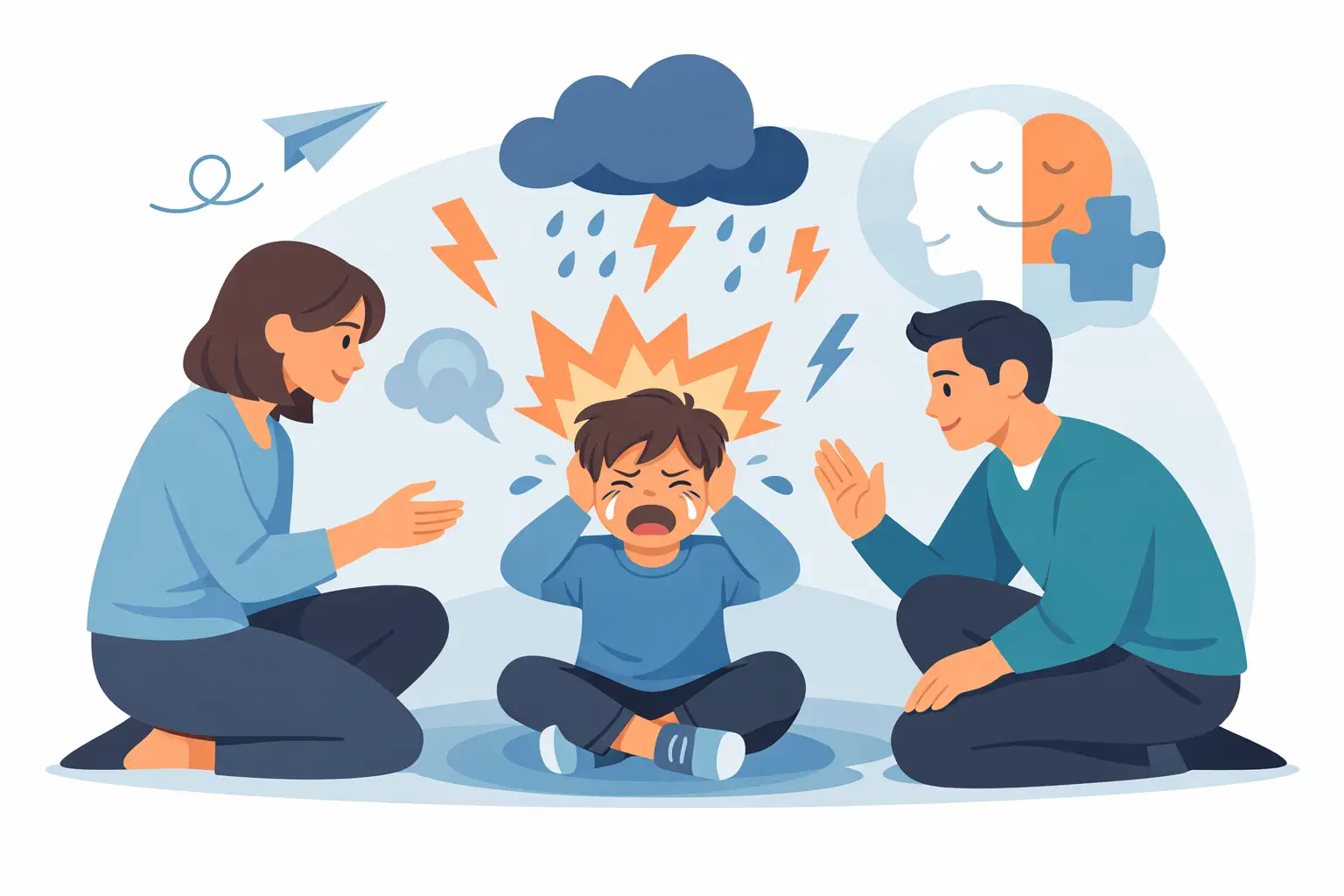
The meltdown usually starts before the screaming. It starts in the car when your child goes quiet, at homework time when one small correction feels like an attack, or five minutes before dinner when hunger, noise, and one unexpected change collide. If you are searching for adhd parenting strategies for meltdowns, you do not need vague advice. You need a plan you can use tonight.
A child with ADHD is not melting down to manipulate you. They are losing access to self-control in real time. Their brain is struggling to shift gears, tolerate frustration, process sensory input, and recover when emotions spike fast. That does not mean you accept chaos. It means you stop treating the meltdown like defiance and start treating it like a nervous system emergency.
Why ADHD meltdowns escalate so fast
ADHD meltdowns often look bigger and more sudden than other behavior problems because the child is not just upset. They are overloaded. Impulsivity, low frustration tolerance, emotional intensity, and difficulty transitioning all stack together. Add tiredness, hunger, screen withdrawal, sibling conflict, or a demand they did not expect, and the brain tips over.
This is why lectures fail in the moment. So do threats, repeated questions, and long explanations about consequences. When your child is fully dysregulated, they cannot use logic the way they can when calm. If you keep pushing for compliance during that peak moment, you usually get a louder, longer, more explosive response.
The goal is not to win the standoff. The goal is to stop the spiral, reduce harm, and bring your child back to regulation as quickly as possible.
The 3-part response that works during a meltdown
When parents are overwhelmed, they often bounce between bribing, yelling, and overexplaining. That inconsistency feeds the chaos. A better move is to use one repeatable sequence: regulate, reduce, then repair.
1. Regulate yourself first
Your child will borrow your nervous system before they borrow your words. If your voice gets sharper, your pace gets faster, and your body moves in like a threat, their brain reads danger. That keeps the meltdown alive.
This does not mean sounding fake-calm while you boil inside. It means lowering your volume, slowing your speech, and cutting your words in half. Stand to the side instead of directly in front of them. Give physical space if they are not safe to approach. Use one short line such as, “You’re overwhelmed. I’m here. We’re getting calm first.”
If your child is hitting, throwing, or trying to run, safety comes before connection. Move objects, protect siblings, and reduce the audience. Calm is not permissiveness. Calm is control.
2. Reduce the demands immediately
In a true meltdown, the brain cannot handle extra tasks. This is the moment to strip the situation down. Turn off the TV. Stop asking questions. Pause the homework. End the power struggle about eye contact, apologies, or “using a better tone.”
Parents sometimes worry this rewards the behavior. It depends on what happens next. Pausing demands during the peak of dysregulation is not giving in. It is strategic de-escalation. You can still return to the expectation later when your child has enough self-control to succeed.
Think short and concrete. “Shoes off. Sit here.” Or, “We are going to the car now.” Or, “Water first, then quiet.” Simple language lowers mental load.
3. Repair after the storm, not during it
Once your child is calm enough to listen, that is when teaching starts. Not with a 20-minute speech. Not with shame. Just a brief reset conversation.
Name what happened in plain language. “The change in plans pushed you over the edge.” Then name the limit. “Throwing the controller is not okay.” Then give one replacement skill. “Next time, you say, ‘I need a break,’ and we move to the calm spot.”
This is where real progress happens. Meltdowns improve when a child practices a better response after the event, not when they are forced to explain themselves at their most dysregulated point.
ADHD parenting strategies for meltdowns that prevent the next one
Stopping the chaos in the moment matters. Preventing the next blowup matters more. The strongest adhd parenting strategies for meltdowns are usually boring on paper and life-changing in practice because they reduce the number of times your child gets pushed past capacity.
Watch for predictable triggers
Most meltdowns follow patterns. Transitions. Hunger. Too much screen time. Homework overload. Social exhaustion. Sensory stress. Being told no without warning. If you only focus on the explosion, you miss the setup.
Start tracking what happened in the 30 minutes before the meltdown. Not forever. Just for one week. You are looking for the top two or three triggers, not building a giant behavior spreadsheet. Once you know the pattern, you can intervene earlier.
If after-school is always rough, do not schedule hard tasks the second your child walks in. If screen shutdown causes a blowup every night, stop giving the transition as a surprise. If errands lead to public meltdowns when your child is already tired, move them or shorten them.
Build transition buffers
Many kids with ADHD do not melt down because of the task itself. They melt down because the shift feels abrupt and forced. The brain needs a bridge.
Give countdowns that are specific and consistent. Five minutes. Two minutes. Now. Pair words with action. If screen time is ending, stand nearby, make eye contact if tolerated, and help them close the app instead of yelling from another room. If homework is starting, begin with the easiest problem to create momentum.
A buffer is not babying. It is reducing friction where ADHD makes friction worse.
Lower sensory load before behavior breaks
Some children look oppositional when they are actually overloaded by noise, clutter, touch, or visual chaos. You will not fix every meltdown with sensory changes, but for many families this is the missing piece.
Dim lights when possible. Lower background noise. Keep one calm-down space predictable and uncluttered. Use a cold drink, a weighted item if your child likes pressure, or a familiar object they associate with calming down. The right sensory input can shorten recovery. The wrong sensory input can prolong the fight.
This is one area where it really depends on the child. One kid calms with a tight hug. Another feels trapped and escalates. One needs movement. Another needs stillness. Your job is to stop guessing and notice what actually works.
What to say during ADHD meltdowns
Language can either fuel the fire or lower it. During a meltdown, less is stronger.
Say things like, “You’re safe,” “I’m staying close,” “We can talk when your body is calm,” or “First calm, then solve.” These phrases work because they are short, repetitive, and regulating.
Avoid statements that demand reasoning or increase shame. “Why are you acting like this?” rarely helps. Neither does, “You’re too old for this,” or, “Stop crying right now.” Those lines usually add threat, and threat keeps the brain defensive.
If your child argues with every word, use fewer words. Some kids calm faster when the parent becomes a steady physical presence with minimal talking. Silence, used well, is not withdrawal. It is containment.
The biggest mistakes parents make
The first mistake is trying to teach in the middle of the storm. The second is being inconsistent after the storm. If one day you ignore the behavior, the next day you explode, and the third day you offer a reward to stop it, your child gets no clear pattern to lean on.
The third mistake is expecting progress to look neat. Meltdowns usually improve in frequency before they improve in intensity, or they improve at home before they improve in public. Some weeks will feel like setbacks. That does not mean the plan failed. It usually means the triggers changed, the demands increased, or your child needs more repetition than you hoped.
Parents also burn out by making every hard moment a moral issue. Not every meltdown is a sign of bad parenting. Sometimes it is poor timing, nervous system overload, and a child who needs more structure than the average parenting script provides.
When structure beats sympathy alone
Empathy matters. But empathy without structure creates confusion. Your child needs both: “I see you’re overwhelmed” and “This is still the limit.”
That balance is what changes family life. You stop reacting emotionally to every explosion. You start using a system. Your child learns that big feelings do not scare you, but they also do not erase boundaries.
For families who are exhausted by daily outbursts, a psychology-backed framework is often the turning point because it removes the guesswork. Emily Carter-Wells’ Meltdown Miracle Method is built for exactly this moment – when love is there, but your current strategy is not stopping the chaos fast enough.
The real win is not a perfectly behaved child. It is a house where meltdowns no longer control the evening, siblings are not walking on eggshells, and you know exactly what to do when emotions spike. Start there, stay consistent, and let calm become the pattern your child learns to trust.
Leave a Reply