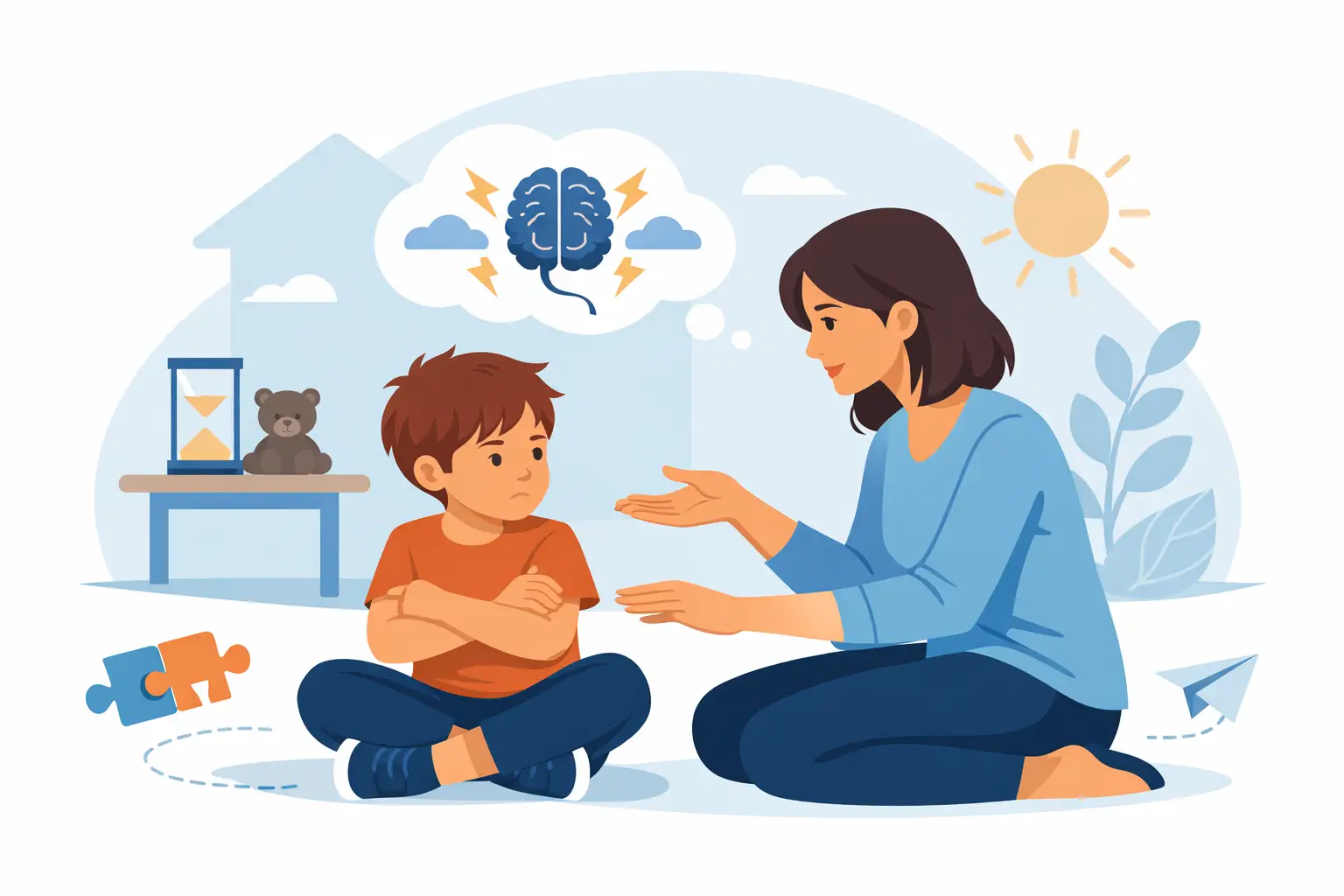
You do not need a louder voice. You need a better system.
If you searched for an adhd discipline without yelling guide, you are probably already exhausted by the same cycle: reminder, resistance, raised voice, guilt, repeat. The hard truth is that yelling may stop a behavior for a moment, but it rarely builds self-control in a child with ADHD. It usually adds stress, fuels shame, and makes the next blowup arrive faster.
That does not mean discipline should be soft, passive, or endless talking. It means your discipline has to match the ADHD brain. Kids with ADHD do better with structure they can see, consequences they can predict, and adult responses that stay steady under pressure. Calm is not weakness. Calm is control.
Why ADHD discipline falls apart when parents yell
Most parents do not start out wanting to yell. They yell because they have repeated themselves six times, the morning is sliding off the rails, and nothing else seems to work. But ADHD changes how a child processes demands, frustration, transitions, and delayed consequences.
A neurotypical child might hear, remember, organize, and act. A child with ADHD may hear the instruction, get distracted halfway through, feel criticized when corrected, and react before thinking. When yelling enters the picture, the brain shifts even further into defense mode. Instead of learning, your child is now fighting, fleeing, freezing, or spiraling.
This is why punishment-heavy discipline often backfires in ADHD homes. The problem is not that your child never cares. The problem is that in a dysregulated state, they cannot access the skills you are demanding in that moment. If you want better behavior, you have to build regulation first and accountability second.
The ADHD discipline without yelling guide: what actually works
The fastest way to reduce chaos is to stop treating every hard moment like a character issue. Start treating it like a pattern you can interrupt.
Discipline works best when it has four parts: clear expectations, immediate feedback, simple consequences, and emotional neutrality. Not warmth without limits. Not limits without connection. Both.
1. Give fewer words and clearer commands
Long lectures disappear on contact with an ADHD brain. Say less. Be direct.
Instead of, “How many times do I have to tell you to put your shoes on because we’re always late and you never listen,” try, “Shoes on now.” Then pause. Make eye contact if possible. If needed, have your child repeat the instruction back.
One command at a time beats a stack of demands. “Backpack on. Then shoes.” This sounds basic, but it removes the executive function overload that causes many standoffs.
2. Correct early, not after the explosion
Parents often step in after disrespect, refusal, or chaos has already peaked. By then, everyone is flooded. Better discipline starts earlier.
Watch for the first sign that your child is slipping. Maybe it is silliness, arguing, wandering, or getting louder. That is your moment. Move closer. Lower your voice. State the limit. “You can be upset, but you cannot hit.” Or, “It is cleanup time. Start with the blocks.”
Early intervention is not overreacting. It is how you prevent a 5-minute problem from becoming a 45-minute meltdown.
3. Use consequences your child can connect to the behavior
Delayed punishments are weak for ADHD. If the consequence comes hours later, many kids will not meaningfully connect it to what happened. Immediate and related works better.
If your child throws a toy, the toy is removed for a period of time. If they refuse to turn off a device, device access shortens next time. If they make a mess during an angry outburst, they help restore the room once calm.
What does not work well? Huge punishments for small infractions, threats you do not enforce, and consequences delivered while you are visibly furious. The goal is not to make your child feel crushed. The goal is to teach cause and effect in a way their brain can actually absorb.
4. Stay boring during defiance
This is where many power struggles either die or grow teeth.
When your child argues, negotiates, or tries to pull you into a fight, your best move is calm repetition. Not a debate. Not a speech. Just the limit.
“Homework starts now.”
“I said no dessert until dinner is cleaned up.”
“You may be mad. The answer is still no.”
Children with ADHD can be highly reactive, and some are excellent at keeping conflict alive. If your energy rises with theirs, the conflict becomes rewarding in its own way. If you stay steady, the emotional fuel runs out faster.
What to do in the moment instead of yelling
A strong ADHD discipline without yelling guide has to work in real life, not just on calm days. Here is the in-the-moment reset.
First, regulate yourself before you try to regulate your child. That may mean one slow breath, unclenching your jaw, or stepping back one foot before speaking. If you feel the urge to shout, do not trust your first sentence.
Next, cut the language in half. Name the behavior. State the limit. Give the next action. “You slammed the door. Not okay. Open it and try again.”
Then choose between two paths: support or consequence. If your child is dysregulated, help them settle first. If they are regulated enough to comply and still refusing, apply the consequence. This distinction matters. A child in meltdown needs containment. A child in defiance needs follow-through.
That is the trade-off many parents miss. If you treat every outburst like manipulation, you become harsher than needed. If you treat every refusal like overwhelm, you lose authority. Good discipline depends on reading the moment accurately.
Build a home that makes yelling less necessary
You cannot rely on willpower at 7:40 a.m. every day. You need an environment that carries some of the load.
Children with ADHD do better when routines are visible and repetitive. Morning checklists, bedtime sequences, and simple house rules cut down on verbal reminders. The less you have to nag, the less likely you are to explode.
Transitions are another major trigger. Give warnings before changes. “Ten minutes until we leave.” Then, “Two minutes.” Then move. Not every child needs this, but many kids with ADHD do much better when the shift is prepared rather than sprung on them.
Positive attention also matters more than stressed parents want to hear. If your child mainly gets intensity when they are doing something wrong, they can start chasing that intensity. Brief, specific praise helps rebalance the system. “You started when I asked. That’s strong listening.” It sounds simple because it is. It also works.
When consequences are not enough
Some behaviors are too repetitive, too explosive, or too emotionally loaded for basic discipline alone. If every homework session becomes war, every screen transition triggers rage, or every sibling conflict turns physical, you may need a tighter behavior plan.
That means identifying the trigger, changing the setup, scripting your response, and deciding the consequence in advance. Parents who improve fastest stop improvising. They use a repeatable framework.
This is where psychology-backed blueprints can change the game. Emily Carter-Wells focuses on tools parents can use immediately because overwhelmed families do not need more theory. They need a system they can follow tonight.
Mistakes that keep the cycle going
The biggest mistake is inconsistency. If yelling sometimes leads to compliance, your brain starts seeing it as necessary. If consequences happen only when you are at your limit, your child learns that rules are flexible until you snap.
Another mistake is giving too many chances. One reminder may be fair. Six reminders teach your child to wait you out.
The third is trying to discipline through shame. Statements like “What is wrong with you?” or “Why do you always do this?” do not create responsibility. They create disconnection. Kids who feel chronically bad often behave worse, not better.
None of this means you must stay perfectly calm. You are human. You may still raise your voice sometimes. The goal is not perfection. The goal is reducing the frequency, recovering faster, and building a house where discipline feels predictable instead of explosive.
A better script for hard days
When things go sideways, use this pattern: “I see you’re upset. The limit stays. Here’s what happens next.”
That single structure does three jobs. It acknowledges emotion, protects your authority, and gives direction. For many ADHD kids, that is far more effective than yelling because it lowers chaos while keeping accountability intact.
Real discipline is not about overpowering your child. It is about building enough structure that your child can succeed, and enough consistency that they know you mean what you say. The calmer you become, the more powerful your discipline gets.
Start there tonight. Pick one trigger, one script, and one consequence you can actually enforce. Calm, in an ADHD home, is not a personality trait. It is a practiced system.
Leave a Reply