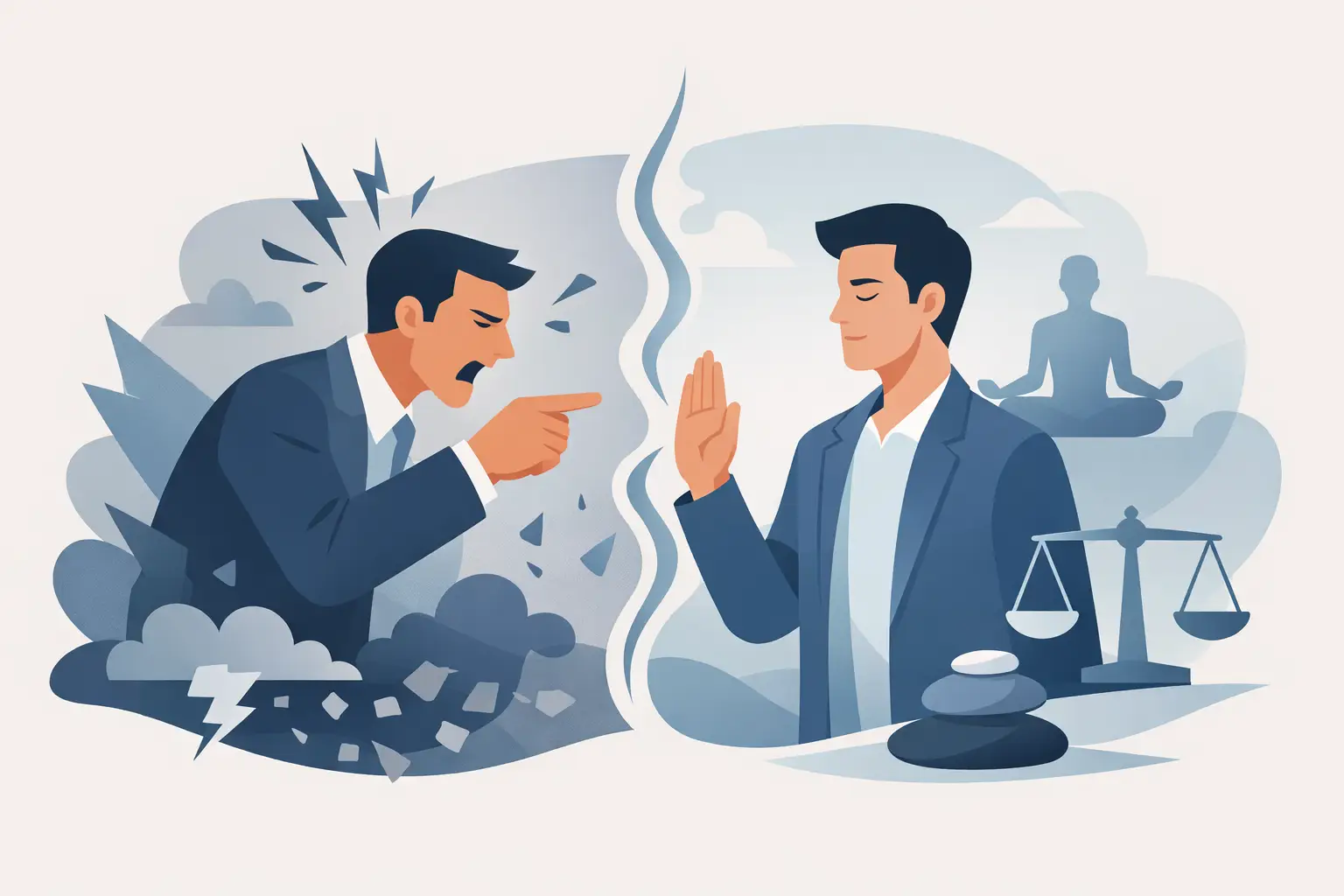
Disrespect hits fast. One eye roll from your child, one cutting comment from your partner, one rude text from someone you’re dating, and your nervous system is already loading a comeback. That is exactly why learning how to respond to disrespect matters – not in theory, but in the moment, when your chest tightens and you want to either explode or shut down.
Most people make one of two mistakes. They overreact and turn one bad moment into a full-blown power struggle, or they underreact and teach the other person that crossing the line comes with no consequence. Neither works. If you want calmer kids, stronger boundaries, or a relationship that does not run on contempt, you need a response that is clear, controlled, and immediate.
The real goal when you respond to disrespect
The goal is not to win. It is not to prove you are smarter, louder, or more hurt. The goal is to stop the behavior, protect your self-respect, and set the tone for what happens next.
That matters because disrespect usually feeds on emotional chaos. When someone gets a big reaction out of you, they often feel more powerful, more justified, or more defensive. A calm, firm response cuts off that fuel. It tells the other person, “You do not get access to me in that tone.”
This is especially important in families and close relationships. If your child talks back, your partner mocks you, or a romantic interest tests your boundaries, the pattern can become the culture. One moment of disrespect is manageable. Repeated disrespect, handled poorly, turns into daily tension.
How to respond to disrespect in the moment
When you feel disrespected, use a simple three-step method: regulate, name, redirect.
Step 1: Regulate before you speak
You do not need a perfect meditation session. You need five seconds of control. Lower your voice. Unclench your jaw. Plant your feet. If needed, pause before answering.
This is not weakness. It is command. The person who controls the pace of the conversation controls the tone of the conversation.
If you respond while flooded with anger, your words will usually become either too harsh or too messy. A short pause protects you from saying something you will spend the next two days cleaning up.
Step 2: Name the behavior clearly
Do not ramble. Do not diagnose. Do not say, “You always disrespect me” unless you want an argument about the word always.
Say what happened.
“I’m willing to talk, but not if you speak to me like that.”
“That tone is not okay. Try again.”
“You can be upset. You cannot be rude.”
“If you want me to listen, speak respectfully.”
Short sentences work because they do not give the other person ten side roads to escape down. They define the line.
Step 3: Redirect or end the interaction
After you name the behavior, show what happens next. This is where boundaries become real.
If the person resets, continue the conversation. If they double down, step away, end the call, or pause the discussion.
For example: “We can talk when you’re calm.” Or, “I’m ending this conversation for now.” Or, with a child, “Ask again respectfully and I’ll answer.”
A boundary without follow-through is just a preference. Follow-through is what teaches people how to treat you.
What to say based on who is being disrespectful
Not all disrespect should be handled the same way. The principle stays the same, but the wording changes depending on the relationship.
If it’s your child
Children often use disrespect when they are dysregulated, overstimulated, frustrated, or testing limits. That does not excuse it. But it does change your strategy. Your job is not to get into a verbal sparring match with a ten-year-old. Your job is to stay steady and lead.
Try: “I will help when you speak respectfully.” Or, “I hear that you’re mad. Start over without the attitude.” If the behavior continues, reduce words and apply the consequence.
The trap for parents is taking the disrespect personally and turning discipline into revenge. Once that happens, the lesson gets lost. Calm authority works better than emotional intensity.
If it’s your partner
Disrespect in a marriage or long-term relationship is more serious because it erodes safety. Sarcasm, contempt, dismissive comments, talking over you, mocking your feelings – these are not small habits if they happen often.
In the moment, say: “I want to resolve this, but I won’t stay in a conversation where I’m being spoken to like that.” Then stop arguing about the original topic until the tone changes.
If this is a repeating pattern, the issue is no longer just one rude comment. The issue is the relationship standard. At that point, one-off scripts are not enough. You need a consistent boundary and a repair process after conflict.
If it’s someone you’re dating
Early disrespect is data. Do not romanticize it. Do not explain it away because they are charming, attractive, or “just blunt.” If someone insults you, pushes your boundaries, or makes you feel small early on, believe the pattern before you invest deeper.
A strong response sounds like this: “That comment was disrespectful. I’m not available for that kind of dynamic.” Then watch what they do next. A healthy person adjusts. An unhealthy one mocks your boundary, minimizes it, or blames you for having one.
What not to do when someone disrespects you
If you want better outcomes, avoid the moves that create more chaos.
First, do not match their energy. Sharp disrespect often invites sharper disrespect. That might feel satisfying for ten minutes, but it usually makes the relationship worse.
Second, do not overexplain your boundary. The longer you explain, the more the other person can argue with your reasoning instead of respecting the limit.
Third, do not pretend it did not bother you when it did. Suppressed resentment leaks out later as distance, passive aggression, or a much bigger explosion.
Fourth, do not set consequences you will not enforce. If you say, “If you talk to me like that again, this conversation is over,” then end the conversation when it happens again.
When disrespect is really a pattern
One rude moment can come from stress, exhaustion, or poor emotional control. A pattern is different. A pattern means the disrespect keeps showing up after you have addressed it clearly.
That is when you need to ask stronger questions. Is this person occasionally reactive, or do they fundamentally feel entitled to treat you poorly? Are they taking responsibility, or just apologizing enough to reset the cycle? Are you dealing with immaturity, or something more manipulative?
This matters because your response has to match the reality. A stressed child needs structure. A defensive spouse needs accountability and a better conflict pattern. A dating partner who repeatedly disrespects you may simply need less access to you.
The boundary script that works under pressure
If you freeze in the moment, use one of these and keep it simple:
“I’m not continuing this conversation in that tone.”
“You can say what you need to say respectfully, or we can talk later.”
“I want to solve the problem. I won’t do it while being disrespected.”
“That was disrespectful. Let’s reset.”
These work because they do three things at once. They name the behavior, protect your emotional footing, and offer a next step. That is how you stop escalation without becoming passive.
Why calm responses are more powerful than emotional ones
People often assume a strong response has to be intense. Usually, the opposite is true. Calm firmness is harder to dismiss. It also keeps you from handing your power to the other person.
When you stay controlled, you force the issue into the open. Now the focus is not your reaction. It is their behavior. That shift matters in parenting, marriage, and dating. It moves the conversation from emotional chaos to clear standards.
And yes, sometimes a calm response will irritate the disrespectful person even more. That does not mean it failed. It often means the old strategy – baiting you, overpowering you, intimidating you – is no longer working.
If you’re tired of repeating yourself
If you keep having the same disrespect problem, stop relying on better wording alone. Wording helps, but systems change behavior. That means consistent consequences, emotional regulation, and a predictable response every time the line gets crossed.
For parents, that may mean ending debates and using a repeatable correction process. For couples, it may mean refusing to continue conflict when contempt enters the room. For dating, it may mean cutting off access faster instead of giving endless second chances.
You do not need to become colder. You need to become clearer.
Respect rarely returns because of one perfect speech. It returns because people learn, through your words and your actions, that access to you requires a basic standard of behavior. Hold that line with calm authority. The people who are capable of healthy connection will meet you there.
Leave a Reply