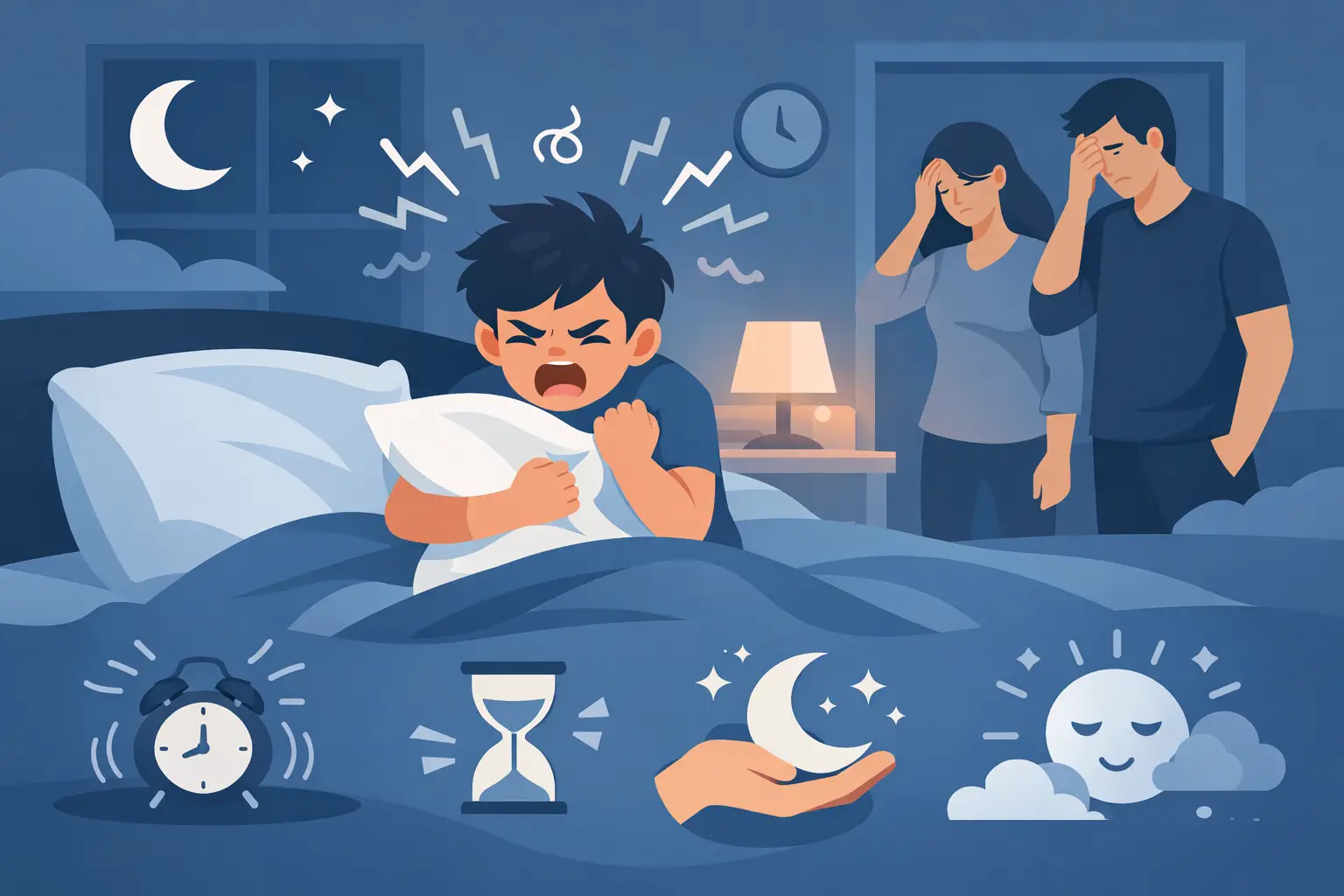
By 8:47 p.m., you can feel the whole house tipping. Your child is suddenly louder, more oppositional, more emotional, and somehow more awake than they were an hour ago. If you are asking what stops ADHD bedtime meltdowns, the answer is usually not stricter discipline or a longer lecture. It is a tighter system – one that reduces overload, removes friction, and gives an ADHD brain fewer chances to spin out.
That matters because bedtime meltdowns are rarely about “not wanting to sleep” in the simple sense. For many kids with ADHD, bedtime is the hardest transition of the day. Medication may be wearing off. Fatigue lowers self-control. Sensory sensitivity ramps up. And the sudden demand to stop moving, stop talking, stop playing, and switch into sleep mode can feel like hitting a wall at full speed.
What stops ADHD bedtime meltdowns most often
The fastest way to stop the nightly blowup is to stop treating bedtime like one big task. ADHD brains struggle with transitions, sequencing, and delayed rewards. “Go get ready for bed” sounds simple to an adult. To a child with ADHD, it can feel vague, boring, and mentally heavy.
What works better is reducing bedtime into a short, predictable chain with almost no decision-making. The goal is not a perfect Pinterest routine. The goal is to lower activation. That means fewer instructions, fewer surprises, less stimulation, and a clear order the child can follow without debating every step.
In practical terms, the most effective pattern usually includes an earlier wind-down, a visual routine, low-light cues, body-calming input, and a parent who stays steady instead of escalating. That last part matters more than most parents realize. A dysregulated child cannot borrow calm from a dysregulated adult.
Why ADHD bedtime meltdowns happen at the worst possible time
Bedtime is a perfect storm. Your child has already spent the day using energy to listen, sit still, transition, and manage disappointment. By evening, that self-control is drained. This is often called restraint collapse. Kids hold it together where they have to, then fall apart where they feel safest.
There is also the biology. Some children with ADHD do not get naturally sleepy in a smooth, predictable way. They look wired when they are actually overtired. Others get a burst of energy right when you expect them to settle. If you respond by pushing harder, talking more, or adding consequences in the moment, you often fuel the fire instead of ending it.
This is why bedtime battles can feel so personal and so confusing. You did the bath. You gave the warnings. You tried the sticker chart. Then one wrong sock, one missed turn with the toothbrush, or one “no” turns the whole night into screaming. That does not mean your child is choosing chaos. It means the system is breaking down under too much friction.
The 5-part system that works tonight
1. Start calming before bedtime starts
If the meltdown begins at 8:30, the fix starts at 7:45. Most parents begin the bedtime routine too late, after the child is already overstimulated or overtired. That is when every request feels like a fight.
Build a buffer before the official routine. Lower the lights. Turn off fast-paced screens. Cut roughhousing. Shift to repetitive, predictable activities. Think coloring, building, reading aloud, or quiet music. The point is to bring the nervous system down gradually instead of demanding an instant switch.
If your child crashes hardest after screens, treat that as data, not a moral issue. Some kids can handle TV before bed. Many kids with ADHD cannot. It depends on the child, the content, and how close it is to lights-out.
2. Use a visual sequence, not verbal reminders
Verbal directions disappear fast in an ADHD brain, especially at night. Repeating yourself ten times usually creates more tension, not more compliance. A short visual routine works better because it externalizes the steps.
Keep it to a few clear actions in the same order every night: bathroom, teeth, pajamas, water, story, bed. If the list is too long, the routine becomes its own trigger. You are aiming for momentum, not perfection.
When your child stalls, point back to the sequence instead of launching into another speech. Fewer words. More structure. That shift alone can stop a surprising amount of conflict.
3. Add body-based calming input
A lot of bedtime advice focuses on behavior but misses the nervous system. Kids with ADHD often need physical calming, not just instructions. Deep pressure, warmth, gentle rocking, slow breathing, or a predictable bedtime back rub can help the body catch up to the plan.
This is where trade-offs matter. Some children calm with touch. Others get more irritated when touched while dysregulated. Some settle with white noise. Others find it stimulating. The right question is not “What should work?” It is “What consistently lowers my child’s intensity within five to ten minutes?”
Watch the body, not just the behavior. Relaxed shoulders, slower speech, less pacing, and softer volume are signs you are moving in the right direction.
4. Remove decision points that spark power struggles
Many ADHD bedtime meltdowns explode around tiny choices because the child is already maxed out. Which pajamas? Which toothpaste? Which book? Which side of the blanket? Choice can be helpful earlier in the evening, but too many choices at the wrong time create friction.
Save decision-making for before the routine starts. Let your child pick pajamas right after dinner or choose tomorrow’s stuffed animal before bath. Once bedtime begins, keep the path narrow. Calm does not come from negotiating better. It comes from reducing the number of things to negotiate about.
5. Stop correcting during the escalation phase
This is the mistake that keeps the cycle alive. Your child starts to spiral, and naturally you try to reason, teach, warn, or correct. But a child in a bedtime meltdown is not available for a lesson. They are in survival mode.
If safety is not an issue, go low and slow. Fewer words. Lower voice. Short phrases. “You’re safe.” “I’m here.” “First breathe, then book.” “We’re doing this one step at a time.” Correction can happen tomorrow. Tonight, the win is de-escalation.
What makes bedtime worse, even when parents mean well
Inconsistent timing is a big one. If bedtime shifts wildly from one night to the next, the child’s body never gets a reliable cue. Another common trigger is stacking demands too close together – homework cleanup, bath, teeth, pajamas, and bed with no transition in between.
Attention can also backfire. If the biggest emotional connection of the day happens during the bedtime battle, the pattern can get reinforced without anyone meaning to do that. This does not mean ignore your child. It means front-load connection earlier. A focused 10 minutes before the routine can reduce the need for chaos later.
And then there is parent exhaustion. When you are drained, it is easy to get louder, move faster, and threaten consequences you cannot maintain. That is human. But ADHD bedtime meltdowns usually improve when the routine becomes more boring, more predictable, and less emotionally charged.
When what stops ADHD bedtime meltdowns depends on the child
Not every child melts down for the same reason. Some are sensory seekers who need heavy work and movement before calming. Some are sensory avoiders who need dim light, less noise, and no scratchy pajamas. Some unravel because hunger hits at bedtime. Others because anxiety spikes the second the house gets quiet.
That is why cookie-cutter bedtime advice often fails. You need to identify the dominant trigger. Ask yourself what happens in the 20 minutes before the explosion. Does it start with transition? Fatigue? Siblings? Toothbrushing? Separation? The pattern tells you where to intervene.
If your child only melts down on days with sports, stimulation overload may be the issue. If they unravel when medication wears off, timing and transition support matter more. If they panic once the lights go out, this may be less about defiance and more about nighttime anxiety.
The real goal is not a perfect bedtime
A good ADHD bedtime routine does not look impressive. It looks repeatable. It lowers friction. It helps your child borrow calm until they can settle on their own. And it protects your relationship while you do it.
If bedtime has become the worst part of your day, do not overhaul everything at once. Pick the highest-leverage fix: start the wind-down earlier, cut one major trigger, use a visual routine, and stay out of power struggles during escalation. Small changes done consistently beat big changes done once.
Parents do not need more bedtime theory. They need a system that works when everyone is tired, touched out, and two minutes from losing it. Start there. Tonight can be quieter than last night, and that is how real change begins.
Leave a Reply