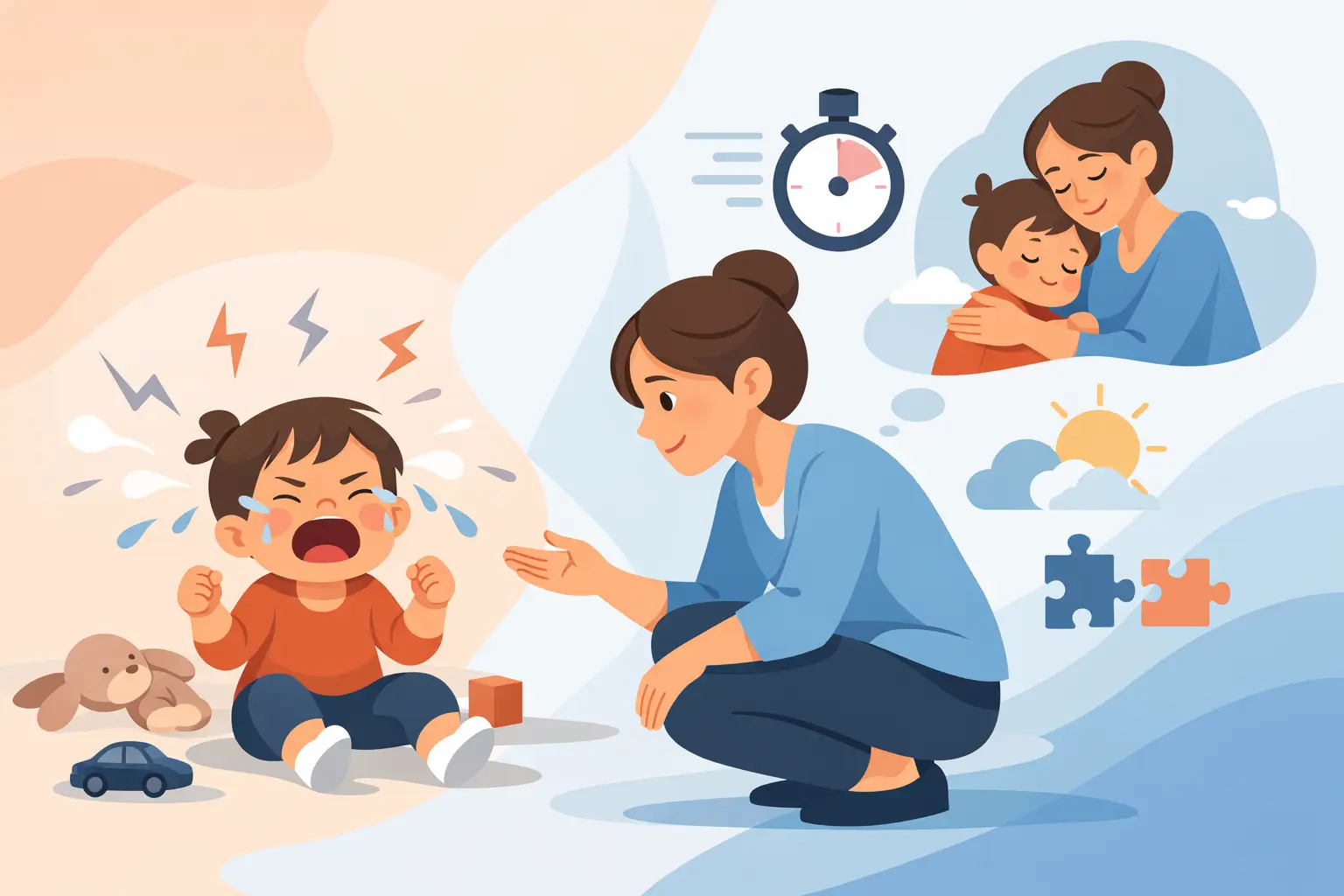
A screaming toddler in the grocery store can make even a calm parent feel cornered. If you are searching for how to stop toddler meltdowns, you do not need vague reassurance. You need a clear system that lowers intensity fast, prevents repeat blowups, and helps you take control without turning every hard moment into a power struggle.
Toddler meltdowns are not the same as bad behavior in the way many parents think. A tantrum can be strategic – a child wants something and protests. A meltdown is loss of control. The nervous system is overloaded, language drops, reasoning fails, and your child cannot access the skills you are trying to demand in that moment. That distinction matters because the wrong response often stretches the episode longer.
Why toddler meltdowns happen so fast
Most meltdowns look sudden, but they usually build in layers. Hunger, fatigue, sensory overload, frustration, transitions, and feeling powerless can stack quietly until one small trigger tips everything over. A broken cracker is not the real problem. It is just the final straw.
This is why parents often feel confused. You said no to something minor, and your child reacted like the world ended. From your perspective, the response is wildly out of proportion. From your toddler’s perspective, their system was already flooded.
The fastest way to change outcomes is to stop treating every meltdown like a discipline issue. First regulate, then teach, then set limits. In that order.
How to stop toddler meltdowns in the moment
When your toddler is already spiraling, your job is not to win. Your job is to reduce stimulation, create safety, and help the nervous system come down. That is the high-leverage move.
Step 1: Lower your own intensity first
Your child will borrow your nervous system before they borrow your words. If you come in louder, faster, or sharper, the meltdown usually escalates. Get physically lower, slow your voice, and keep your face steady. Short phrases work better than explanations.
Say what is true and simple: “You’re upset.” “I won’t let you hit.” “I’m here.” That kind of language is grounding. A lecture is not.
This can feel unnatural, especially if you are embarrassed, touched out, or angry. But composure is not passivity. It is control. Parents who stay regulated can interrupt the chaos much faster.
Step 2: Remove fuel
If the environment is loud, bright, busy, or full of demands, change it. Move to the car, step into a hallway, leave the play area, turn off the TV, or clear siblings back. A dysregulated toddler does not need more input.
If safety is an issue, block kicking, biting, or throwing without adding extra emotion. Calm restraint, when necessary for safety, is very different from punitive force. The message is simple: “I won’t let you hurt me” or “I won’t let you throw that.”
Step 3: Stop talking so much
Parents often overload a child in crisis with too many words. “We do not act like this, use your words, I told you before, if you don’t stop then…” None of that lands well in a flooded brain.
Use one sentence at a time. Repeat if needed. The goal is predictability, not persuasion.
Step 4: Offer one regulating action
Some toddlers calm faster with pressure, closeness, or a very simple physical reset. Others need space. It depends on the child. You can try, “Do you want a hug or space?” If your toddler cannot answer, choose the least stimulating option and stay nearby.
For some children, a sip of water, slow breaths with you, or sitting quietly on your lap helps. For others, even touch feels like too much during peak distress. Do not force a soothing method that clearly makes things worse.
The 3-part meltdown prevention framework
If you want fewer meltdowns this week, not just better reactions today, prevention has to become deliberate. The strongest plan is simple: predict, protect, prepare.
Predict the pattern
Start tracking when meltdowns happen. Not forever – just for a few days. Look for timing, transitions, places, people, and demands. Many parents discover the same hotspots repeating: late afternoon, leaving the park, getting dressed, sibling conflict, errands close to nap time.
Once you can predict the pattern, you stop getting blindsided. That gives you leverage.
Protect the basics
A tired, hungry, overstimulated toddler is much more likely to melt down. That does not mean every episode is preventable, but it does mean your baseline matters. Strong sleep routines, snack timing, downtime, and transition buffers reduce the load on your child’s system.
This is where many families get honest relief. They stop expecting a toddler to handle adult pacing. A packed schedule, skipped nap, rushed errand, and late dinner can create the exact conditions for disaster. Protecting the basics is not coddling. It is evidence-based prevention.
Prepare before the hard moment
Do not wait until the trigger hits. Prime your toddler before transitions and high-friction tasks. Tell them what is coming, what is expected, and what happens next. Keep it brief and consistent.
For example: “Two more minutes, then shoes, then car.” Or, “We are buying groceries, not toys. You can help with apples.” Preparation gives a toddler structure and a sense of control. Both matter.
Boundaries still matter – but timing matters more
Many parents fear that calming a meltdown rewards bad behavior. Usually it does not. A dysregulated child is not learning the lesson you want during peak intensity anyway. This is why timing matters.
You can absolutely hold a firm limit while staying calm. “No candy before dinner” can remain true. “I won’t let you hit” can remain true. The difference is that you are not trying to force emotional compliance on the spot.
After the storm passes, that is when you teach. Keep it short. “You were mad. Hitting is not okay. Next time, stomp feet or say help.” Then move on. Rehashing the entire scene often adds shame without building skill.
How to stop toddler meltdowns caused by transitions
Transitions are one of the biggest triggers because toddlers struggle with stopping one experience and shifting into another. They also have very little control over their day, so sudden changes can feel jarring.
The fix is not endless negotiation. The fix is structure. Give warnings, use the same routine language, and make the next step visible. You might count down, sing a cleanup song, or use a consistent phrase like, “First shoes, then outside.” Repetition builds security.
Choices can help, but only if they are real and limited. “Blue shoes or red shoes?” works. “What do you want to do now?” often creates more friction because it opens a power struggle you cannot actually accommodate.
If transitions are consistently explosive, reduce complexity. Too many instructions at once can flood a toddler fast. One step, then the next.
What makes meltdowns worse
Some common reactions feel natural but backfire. Threats often increase fear and intensity. Long explanations overwhelm. Giving in after a full meltdown teaches your child that escalation changes the outcome, which can strengthen tantrum behavior over time.
Shame also works poorly. A toddler is not improved by hearing they are acting like a baby, embarrassing you, or being ridiculous. That kind of response weakens connection and often increases future instability.
There is also a trade-off parents should hear clearly: if you become so focused on preventing every meltdown that you remove every limit, life gets harder, not easier. The goal is not perfect calm. The goal is a home with steadier rhythms, clearer boundaries, and faster recovery.
When to look deeper
Some toddlers melt down more often because of temperament. Some are more sensitive to noise, transitions, hunger, or frustration. Others may be dealing with language delays, sensory challenges, sleep disruption, or developmental differences that make regulation harder.
If meltdowns are extreme, very frequent, unusually long, or paired with major sleep and behavior issues, it may help to zoom out and assess the full pattern. You are not failing. You may just need a more targeted behavior blueprint instead of generic parenting advice.
That is where a structured, implementation-first approach can change everything. Resources like those at Emily Carter-Wells are built for parents who want fast relief, not theory they will never use.
The standard to hold onto
Your toddler does not need a perfect parent. They need a regulated leader. That means less reacting, more pattern recognition, and stronger follow-through in the moments that usually knock your household off balance.
If you stay calm, reduce overload, hold clear limits, and prepare for known triggers, meltdowns usually start losing power. Not overnight in every case, but often faster than exhausted parents expect. Real change begins when you stop chasing every outburst emotionally and start responding with a system.
Leave a Reply