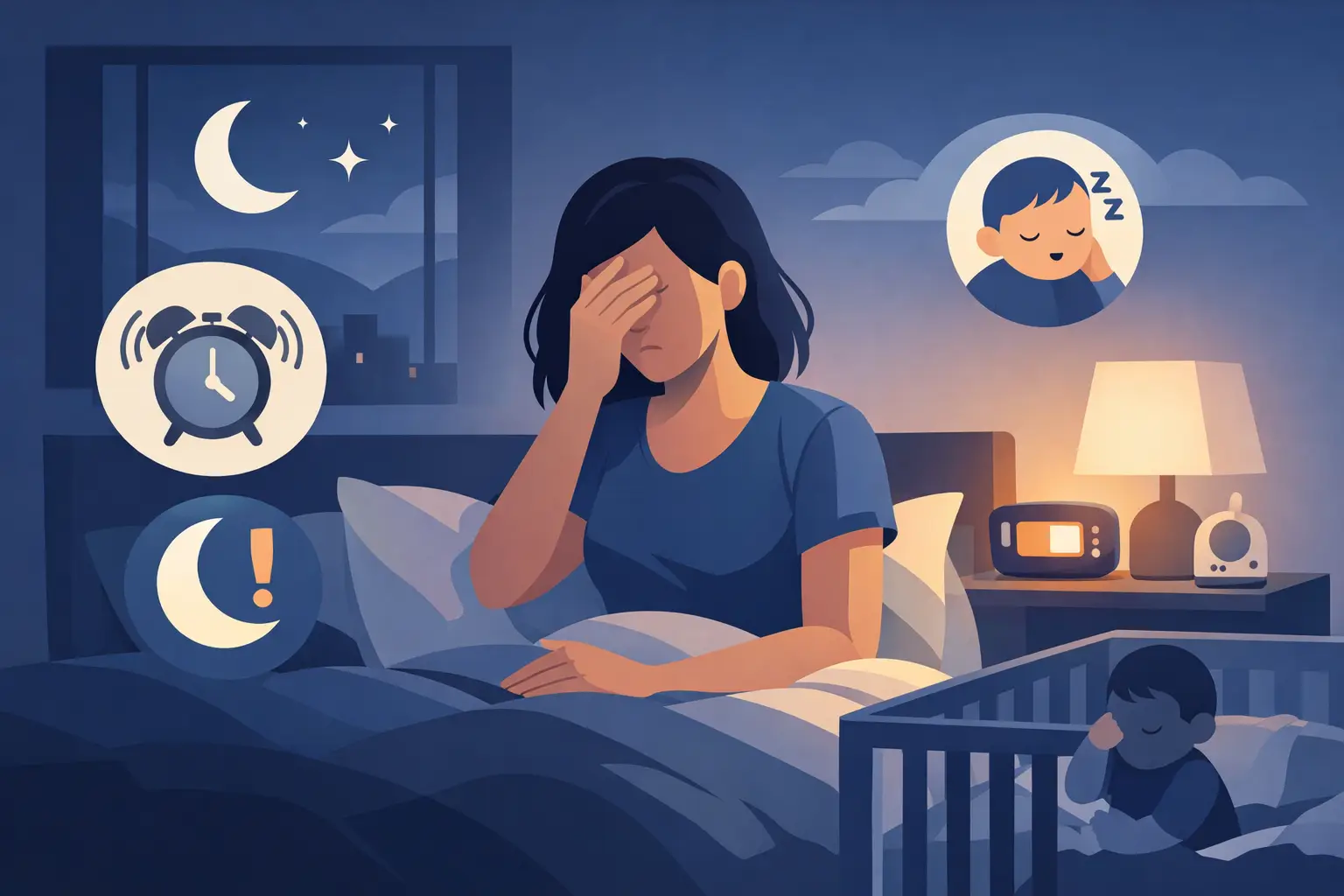
You do not need another bedtime tip that sounds nice and changes nothing at 2:13 a.m. If you are trying to stop night wakings, you need a clear diagnosis first, because not all wake-ups come from the same problem. Some are driven by overtiredness, some by sleep associations, some by feeding patterns, and some by a schedule that looks fine on paper but falls apart in real life.
That is why random fixes usually fail. A later bedtime, more feeding, less feeding, a longer nap, a shorter nap – done without a system, these moves can make nights worse. The fastest way forward is to identify the pattern, remove the trigger, and stay consistent long enough for your child’s nervous system to trust the new routine.
Why night wakings keep repeating
Parents are often told that frequent waking is just a phase. Sometimes that is true. But when the same wake-ups happen night after night, usually at similar times, there is almost always a habit loop underneath them.
The most common driver is a sleep association. If your baby falls asleep while feeding, rocking, bouncing, or being held every single night, they may expect the same help when they transition between sleep cycles. That is not manipulation. It is pattern recognition. They woke slightly, noticed the conditions had changed, and called for the only method they know.
The second major trigger is overtiredness. This sounds backward to exhausted parents, but a child who stays awake too long before bed often sleeps worse, not better. Cortisol rises, the body gets activated, and instead of settling into deeper sleep, your child becomes more likely to wake early and often.
Then there is under-tiredness, which gets missed just as often. If daytime sleep is too long or bedtime is too early for your child’s actual sleep needs, they may simply not have enough sleep pressure to stay asleep. This is where well-meaning advice can backfire. A schedule that worked last month may stop working as your baby grows.
Hunger, reflux, teething, illness, room temperature, noise, and developmental leaps can all play a role too. The mistake is assuming every waking has the same cause. The goal is not to force sleep. The goal is to remove the reason your child keeps needing help at night.
How to stop night wakings without guessing
Start with a three-night audit. Not forever. Just long enough to spot the pattern. Write down bedtime, how your child fell asleep, each waking, how long they were awake, and how they went back to sleep. Also note naps and feeding times during the day.
This gives you the data most tired parents do not have in the moment. You may notice that the first waking always happens 45 to 90 minutes after bedtime, which often points to overtiredness or a false start. You may notice wake-ups every two to three hours, which often points to a strong sleep association. You may notice one consistent early-morning waking, which may be schedule-related rather than hunger.
Once you see the pattern, fix one variable at a time.
If your child is falling asleep with a lot of assistance, begin by changing the bedtime routine so they enter the crib drowsy but awake, or at least less dependent on the final step they have been using. This is where parents get nervous, because they assume any shift means hours of crying. It does not have to. Gentle sleep training works best when the rest of the schedule is solid and your response is calm, predictable, and boring in the best way.
If overtiredness is the issue, pull bedtime earlier by 15 to 30 minutes for several nights and protect the last wake window. Do not keep stretching it because you hope your child will sleep in. Usually, they will not.
If under-tiredness is the issue, cap naps if they are running long and make sure bedtime matches your child’s age and actual sleep needs, not an idealized routine from social media.
The bedtime piece that changes the whole night
Most night sleep problems are won or lost in the hour before bed. If bedtime is chaotic, stimulating, or inconsistent, you are asking an overtired brain to do something it is not ready to do.
Your routine does not need to be elaborate. It needs to be repeatable. Dim lights. Lower noise. Use the same 3 to 5 steps in the same order. Feed early enough in the routine that it does not become the only path to sleep if feeding to sleep is part of the problem. Then place your child down in a state that lets them practice finishing the job of falling asleep in their sleep space.
This matters because the first stretch of the night sets the tone. A child who drifts off independently at bedtime is more likely to reconnect sleep cycles without needing the exact same rescue every time they partially wake.
There is a trade-off here. Changing bedtime habits can create short-term protest. That is normal. But keeping a pattern that no longer works creates long-term exhaustion for everyone in the house. You are choosing which hard you want.
When feeding is part of the problem
Not every night feed should be removed. Age matters. Weight gain matters. Medical history matters. But many older babies continue waking from habit long after they need the calories.
A practical rule is to separate feeding from every waking if your pediatrician has already confirmed your child is healthy and growing well. You can reduce ounces gradually, shorten nursing time gradually, or target only specific feeds first rather than stopping everything at once. That is often easier on both the baby and the parent.
What you do not want is accidental reinforcement. If one waking gets rocked, another gets fed, another gets brought into your bed, and another gets a full light-on diaper change, your child receives mixed signals. Consistency is what helps the nervous system settle. Not intensity.
How to stop night wakings in a gentle way
Gentle does not mean vague. It means clear, responsive, and consistent.
If you want to stop night wakings without cry-it-out, your response needs to be predictable. Pause before rushing in. Give your child a moment to resettle. If they escalate, respond with the least amount of help needed, not the maximum amount automatically. That might mean a hand on the chest before picking up, or a brief verbal reassurance before feeding.
Then keep the response similar each time. If you fully rescue at 11:00, half-rescue at 1:00, and wait 20 minutes at 3:00, your child does not get a stable message. They get a variable reward pattern, which can make waking more persistent.
Gentle methods work best when you commit long enough to make them work. Parents often abandon a plan after one rough night, then accidentally teach the old pattern even more strongly. Give a reasonable strategy several nights before you decide it failed.
Red flags that are not just sleep habits
If night wakings come with screaming that sounds pained, frequent spit-up, chronic congestion, snoring, unusual breathing, eczema flares, poor weight gain, or a sudden major change in sleep, do not assume this is behavioral. Medical issues can look like sleep issues.
The same goes for a newborn. Very young babies have different sleep biology, different feeding needs, and very different expectations. A two-month-old waking at night is not the same problem as an older baby waking out of habit.
There is no prize for forcing a sleep-training plan onto the wrong situation. Smart parents do not push harder. They diagnose better.
The fastest way to get your nights back
If you have tried tweaking bedtime, naps, and feeds and nothing sticks, the problem is usually not effort. It is structure. Tired parents do too much reacting and not enough pattern-based planning, because they are operating on broken sleep and survival mode.
That is exactly why a step-by-step framework works better than random advice. A proven plan helps you decide what to change first, what to leave alone, and how to respond when your child protests. It removes second-guessing, which is often the real reason families stay stuck.
Emily Carter-Wells’ sleep approach is built for parents who want fast clarity without harsh methods. The goal is simple – stop the chaos at night by using psychology-backed routines that teach your child what to expect and how to sleep longer.
Tonight, pick one pattern to fix. Not five. One. Tighten the bedtime routine, protect the wake window, and respond consistently. Sleep usually starts improving when your child stops receiving a different message every night.
Leave a Reply