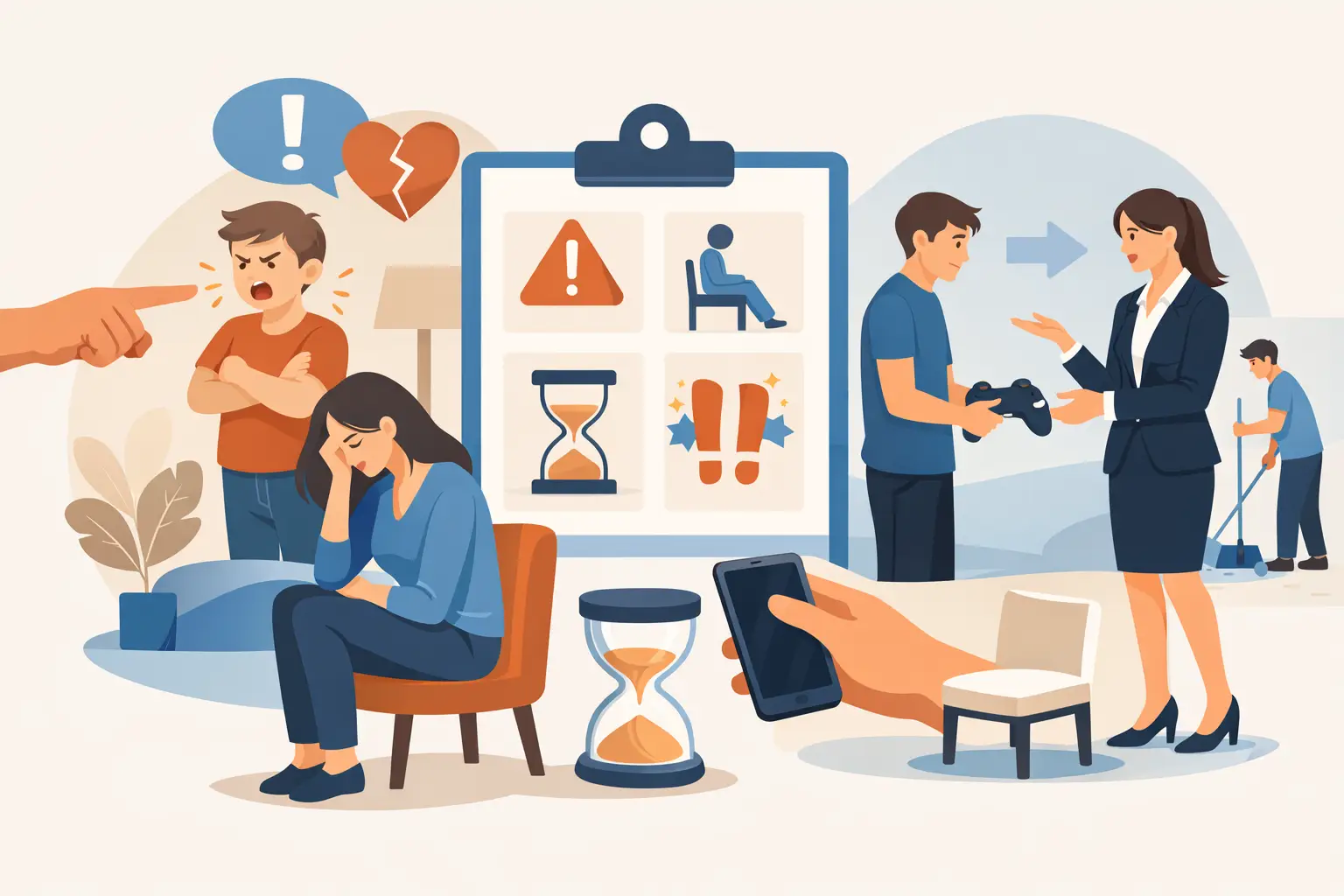
Rudeness usually shows up at the worst possible moment – the eye roll in the grocery store, the smart comment in front of grandparents, the cutting tone after you’ve already had a brutal day. When parents search for the best consequences for rude behavior, they are rarely asking for theory. They want something that stops the disrespect fast, without turning the whole house into a shouting match.
That matters because rude behavior is not just a “bad attitude” problem. It is often a skills problem, a regulation problem, or a testing-limits problem. If your consequence only punishes the surface behavior, you may get a short-term apology and the same disrespect tomorrow. If your response is clear, immediate, and tied to the behavior, you can change the pattern.
What the best consequences for rude behavior actually do
The best consequences for rude behavior are not the harshest ones. They are the ones that make sense to a child, happen quickly, and teach a better replacement behavior. That is the standard.
A strong consequence does three jobs at once. First, it stops the current behavior. Second, it creates enough discomfort that your child wants to make a different choice next time. Third, it points directly to what respectful behavior should look like.
This is where many parents get stuck. They either go too soft and repeat “be nice” ten times, or they go nuclear and remove everything for a week. Neither approach works well for long. Too soft teaches your child that disrespect is negotiable. Too extreme teaches resentment, power struggles, and sneaky behavior.
The sweet spot is calm, immediate, and proportionate.
9 consequences that work better than yelling
1. Immediate redo
If your child speaks rudely, stop the interaction and have them try again in a respectful tone. This is one of the fastest and most effective consequences because it directly targets the skill they failed to use.
If they say, “Give me that,” your response is simple: “Try that again respectfully.” If they roll their eyes and snap, “Whatever,” the conversation pauses until they restate it appropriately.
This works because it does not let rude behavior complete its job. Your child does not get access, attention, or control through disrespect.
2. Temporary loss of the conversation
If a child cannot speak respectfully, they lose access to the interaction for a short period. You are not rejecting them. You are setting the condition for engagement.
You can say, “I’m happy to talk when your voice is respectful. We’ll try again in five minutes.” This is especially effective for older kids who use tone to dominate the exchange.
The trade-off is timing. If your child is already emotionally flooded, they may need regulation before they can re-enter the conversation successfully.
3. Loss of immediate privilege
When rude behavior appears around a privilege, attach the consequence to that privilege. If your child is rude while asking for screen time, a ride, a snack, or a playdate, the answer becomes no for now.
That sounds like: “You asked disrespectfully, so the answer is no right now. You can try again later.” This teaches a powerful cause-and-effect lesson. Respectful communication opens doors. Disrespect closes them.
This consequence works best when the privilege is connected to the moment. Taking away a weekend activity because of a rude comment at breakfast can feel random, which weakens the lesson.
4. Repair before moving on
A real consequence should include repair. If your child speaks rudely to a sibling, parent, teacher, or friend, they need to make it right before the day just rolls forward.
Repair might mean a direct apology, helping the person they hurt, redoing the request respectfully, or writing a short note for older kids. The key is that “sorry” alone is not always enough. Repair should cost a little effort.
This is one of the best long-term strategies because it trains accountability, not just obedience.
5. Short removal from the activity
If your child is being rude during dinner, game night, a family outing, or a group activity, remove them briefly from that setting. Not for a dramatic punishment. For a reset.
You might say, “You may rejoin when you’re ready to speak respectfully.” This sends a clear message: if you disrupt the environment with disrespect, you lose access to it for a short time.
For younger children, keep it brief and structured. For older kids, avoid turning it into an extended standoff.
6. Extra effort to earn back trust
Chronic rudeness often requires more than a one-time correction. If the pattern keeps repeating, your child may need to complete a concrete action to rebuild trust and self-control.
That could mean doing a respectful communication practice, helping with an extra household task after being rude to a parent, or spending a day demonstrating respectful language before a privilege returns. The point is not humiliation. The point is effort.
This consequence works well when simple reminders have stopped working.
7. Natural social consequence
Sometimes the best consequence is letting reality do the teaching. If your child is rude to a sibling, that sibling may not want to keep playing. If they are rude in a group, they may miss out on positive attention.
Parents often rush in too quickly here. But natural consequences can be powerful when they are safe and age-appropriate. You can name what happened without rescuing: “When you spoke that way, your brother didn’t want to keep playing.”
That helps your child connect behavior to relationship outcomes.
8. Calm restitution for public disrespect
Public rudeness can trigger instant parental embarrassment, which is exactly when consequences go sideways. If your child is rude in a store, at a restaurant, or at a family event, your job is to stay controlled.
A strong consequence is immediate removal from the situation, followed by a repair step later. If they cannot behave respectfully in the store, the shopping trip ends for them. If they were rude to a relative, they make amends afterward.
The mistake to avoid is a long lecture in public. That usually fuels more defiance, not less.
9. Scripted practice for repeat offenders
If your child keeps using the same rude phrases, treat it like a pattern that needs rehearsal. Practice the correct script when everyone is calm.
For example: “Instead of ‘You never let me do anything,’ say ‘I’m frustrated. Can we talk about it?’” Then have them repeat it a few times. Yes, it feels basic. That is why it works.
Children often default to rude language because it is fast, familiar, and emotionally loaded. Practice gives them another route.
When consequences fail
If you have tried consequences and the rudeness keeps escalating, the problem may not be the consequence itself. It may be inconsistency, overload, or a child who is dysregulated before the rude behavior even begins.
A child with ADHD, sensory overload, sleep deprivation, or chronic frustration may need more front-end support. That does not mean you excuse disrespect. It means you pair firm boundaries with skill-building and regulation tools.
This is why yelling tends to fail. It delivers intensity, but not structure. It may stop the behavior in the moment through fear or shock, yet it does not teach what to do instead.
How to deliver consequences without feeding the power struggle
Your tone matters almost as much as the consequence. The more emotional you get, the more the interaction becomes about your reaction instead of your child’s behavior.
Keep your response short. Name the behavior, state the consequence, and stop talking. “That was rude. Try again respectfully.” Or, “I won’t continue this conversation while you speak that way.” That is enough.
Do not stack consequences in anger. Do not negotiate in the heat of the moment. Do not threaten giant punishments you will not enforce. Authority comes from follow-through, not volume.
If your child doubles down, stay steady. Consequences often get worse before they get better because your child is testing whether the limit is real. If you fold after the protest, you teach them to push harder next time.
What to do tonight if rudeness is constant
Start by choosing one or two consequences you can enforce every single time. Not five. Not a complicated behavior chart you will forget by Wednesday. Pick a simple redo and a loss of privilege tied to the moment.
Then use one sentence to define the house rule: “In this house, you can be upset, but you cannot be rude.” That line works because it protects emotion without allowing disrespect.
If your child struggles with explosive behavior, rapid mood shifts, or constant conflict loops, you may need a more structured behavior blueprint instead of one-off corrections. Families get better results when consequences are part of a full system, not random reactions. That is where psychology-backed tools can change the pace quickly.
Rude behavior does not need a dramatic punishment. It needs a consequence that is fast, clear, and impossible to misunderstand. When you stop rewarding disrespect with attention, arguing, or second chances without repair, your child learns something far more valuable than compliance – they learn how to communicate with control.
Leave a Reply