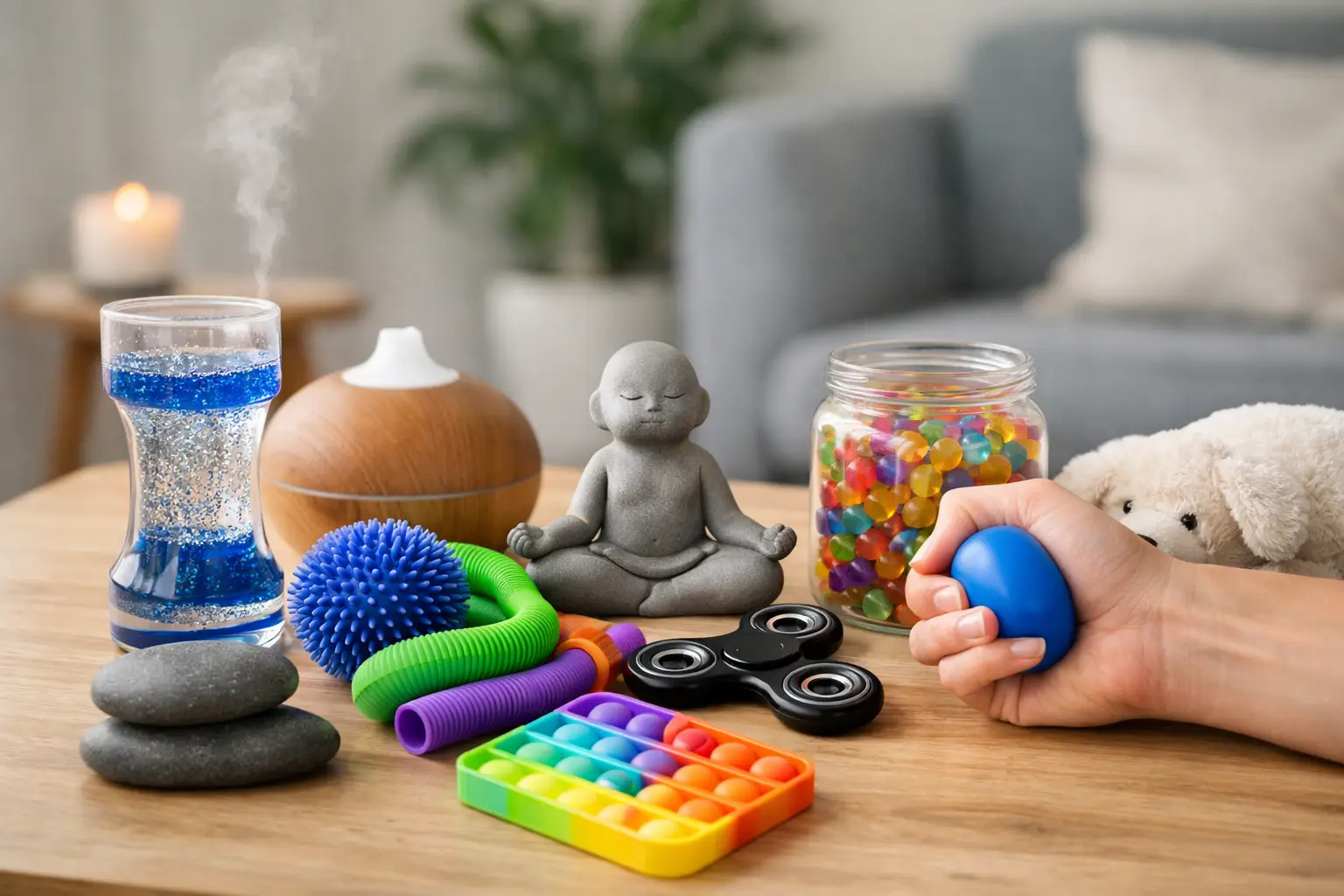
The best calm down tools are not random toys you hand over after a child has already hit the point of no return. They are simple, repeatable supports that help a stressed nervous system shift from overload to safety. When your child is screaming, throwing, arguing, or spiraling over one small request, you need a plan that works in the moment – not another lecture about feelings.
A meltdown is not a parenting failure. It is a capacity problem. Your child has run out of the ability to manage frustration, sensory input, disappointment, hunger, fatigue, or a sudden change in routine. The goal is not to force calm through consequences or reasoning. The goal is to reduce pressure, create regulation, and teach the skill when your child can actually receive it.
What Makes a Calm Down Tool Work?
A useful calm down tool does one of three things: it lowers sensory intensity, gives the body a safe outlet for stress, or helps the child reconnect to a predictable routine. The strongest tools do not demand a lot of language or self-control at the exact moment those skills are unavailable.
This is especially critical for children with ADHD, anxiety, sensory sensitivity, or a history of explosive reactions. A child in full fight-or-flight mode cannot process a long explanation, negotiate fairly, or suddenly “use their words.” Start by helping the body settle. Solve the behavior later.
The trade-off is that no single tool works for every child. Some children need movement. Others become more agitated with too much stimulation and need quiet, dim light, and space. Watch what happens after you introduce a tool. If intensity drops even slightly within a few minutes, you are moving in the right direction.
10 Best Calm Down Tools for Kids
1. A designated calm-down space
Create one small, predictable place your child can use when emotions get too big. This is not a punishment chair and it should never feel like banishment. Think soft lighting, a floor cushion, a blanket, and a few regulation tools kept within reach.
Use neutral language: “Your body needs a reset. Let’s go to your calm space.” The more consistently you use the same location before, during, and after difficult moments, the faster your child learns what it is for.
2. Slow breathing with a visual cue
Telling an upset child to “take a deep breath” often fails because it is too vague. Give breathing a physical pattern instead. Have them trace one finger slowly up and down the fingers of their opposite hand: breathe in as the finger rises, breathe out as it lowers.
For younger children, pretend to smell hot cocoa and cool it down with a long exhale. Keep it short. Three slow breaths are more realistic than demanding ten perfect ones from a child who is furious.
3. Heavy-work movement
Stress chemicals need somewhere to go. Heavy work gives the body safe resistance and can quickly reduce the frantic energy behind a meltdown. Pushing hands against a wall, carrying a basket of books, doing animal walks down the hall, or squeezing a pillow can all help.
This is one of the best calm down tools for a child who paces, kicks, slams doors, or seems physically unable to sit still. Do not insist on stillness first. Use movement to earn stillness.
4. A cold sensory reset
A cool washcloth on the face, holding an ice pack wrapped in fabric, or sipping cold water can interrupt an escalating stress response. The sensation gives the brain a strong, concrete input to focus on without requiring a big conversation.
Use this gently and offer choices. A child who hates cold sensations will feel more threatened, not more regulated. Try, “Cold water or your weighted blanket? You choose.”
5. Noise-reducing headphones
Some meltdowns are not primarily about defiance. They are about sensory overload. A crowded store, loud sibling conflict, a barking dog, multiple instructions, or a busy classroom day can leave a child with no buffer left.
Keep noise-reducing headphones in the car, the calm-down space, or a backpack. They will not solve the underlying disappointment or limit, but they can lower the sensory volume enough for your child to regain control.
6. A feelings scale with a clear action plan
Children often notice their emotions only after they explode. A simple one-to-five scale teaches them to catch the climb earlier. One means calm, three means frustrated, and five means “I might lose control.”
Pair every number with an action. At level two, get water. At level three, take a movement break. At level four, use the calm space with an adult nearby. This turns emotional awareness into a concrete decision instead of a vague question like, “How do you feel?”
7. A short, repeatable script from you
Your voice can either lower the temperature or raise it. In the middle of a meltdown, use fewer words, not more. Try: “You are safe. I won’t let you hurt anyone. We can talk when your body is calmer.”
Say it slowly and repeat it without arguing the facts. Do not get pulled into proving that the limit is fair. If your child is yelling because screen time ended, the boundary can remain firm while your tone stays calm: “Screens are done. I will help you get through being mad.”
8. A weighted lap pad or firm pressure
Many children regulate through steady, non-threatening pressure. A weighted lap pad during homework, a heavy blanket while reading, or a firm pillow hug can provide grounding when a child feels scattered or overstimulated.
Use weighted items thoughtfully. Your child should be able to remove the item independently, and it should never be used to restrain them. The purpose is comfort and body awareness, not control.
9. A transition warning system
A large number of daily explosions happen at transition points: leaving the park, stopping a game, getting into the bath, starting homework, or getting out the door. Prevention is a calm-down tool too.
Give a clear warning at ten minutes, five minutes, and one minute. Then state what happens next in direct language. A visual timer works well because it removes you from the role of the “bad guy” who suddenly ends the fun.
10. A repair routine after the storm
Calm down tools are not complete until you teach repair. Once your child is fully settled, keep the conversation brief: name what happened, identify the early warning sign, and choose one tool for next time.
For example: “You started yelling when the game ended. Next time, when your body gets to a three, you can squeeze the pillow or ask for two minutes in your calm space.” This builds skill without shame. It also makes consequences more effective because the child has a replacement behavior to practice.
How to Use Calm Down Tools Without Rewarding the Meltdown
Many parents worry that offering comfort during a meltdown teaches a child to act out. The distinction is simple: validate the feeling without removing a reasonable boundary. You can provide water, space, breathing, and reassurance while still holding the line on bedtime, screen limits, homework, or leaving the store.
Do not make the tool a prize for screaming. Introduce it during calm moments first. Practice the breathing game when everyone is relaxed. Let your child help set up the calm-down space. Use movement breaks before homework becomes a battle. Repetition creates access under stress.
If your child becomes unsafe, prioritize safety over teaching. Move siblings away, clear nearby objects, lower your voice, and stay close enough to supervise without crowding them. When aggression, self-harm, or extreme distress is frequent or escalating, seek individualized support from a qualified pediatric or mental health professional.
Build Your Child’s Personal Calm Down Kit
Do not buy ten items and hope for the best. Start with two tools matched to your child’s pattern. The child who gets louder and more physical may need wall pushes and a cold drink. The child who covers their ears and cries may need headphones and a quiet corner. The child who fights every transition may need a timer and a practiced script.
Track what works for one week. Notice the trigger, the tool offered, and how long recovery took. This gives you real data instead of relying on memory after another exhausting evening. If meltdowns are repeatedly hijacking your home, a structured system such as the Meltdown Miracle Method can help you identify triggers, stop escalation earlier, and build a response your whole family can follow.
You do not need to stay trapped in the cycle of warning, yelling, guilt, and temporary peace. Pick one tool, practice it before the next hard moment, and make calm a skill your child can build starting today.
Leave a Reply