Category: Feminine Strategy and Life Mastery

  • How to Reconnect With Your Spouse Fast

    How to Reconnect With Your Spouse Fast

    You do not usually wake up one day and realize your marriage is broken. More often, you notice the small signs first. Conversations turn transactional. Affection gets replaced by logistics. The person who used to feel like home starts to feel like one more demand on an already overloaded day. If you are searching for how to reconnect with your spouse, the good news is this: disconnection is common, and it can be reversed faster than most couples think when they stop guessing and start acting with purpose.

    This is not about waiting for a perfect weekend away or hoping the spark magically returns. Reconnection happens when two people change the pattern they are living inside. That means less vague effort, more high-leverage action.

    Why couples disconnect even when they still love each other

    Most couples do not drift apart because love disappeared. They drift apart because pressure took over. Kids, work, poor sleep, resentment, screen time, stress, and unresolved conflict slowly crowd out warmth. The relationship starts running on maintenance mode.

    That matters because many people misread the problem. They assume the loss of connection means the marriage is failing at its core. Often, the real issue is that the marriage has become operational instead of relational. You are managing life together, but you are no longer meaningfully experiencing each other.

    There is also a second layer that gets ignored. When stress rises, people protect themselves differently. One spouse gets critical and controlling. The other gets quiet and avoidant. One wants to talk now. The other needs space. Neither response is automatically wrong, but the mismatch creates more distance. If you do not identify that cycle, you will keep fighting the symptom instead of fixing the system.

    How to reconnect with your spouse by fixing the pattern first

    If you want results, stop starting with grand gestures. Start with the repeated moments that are damaging trust and closeness.

    Think of your marriage as a daily feedback loop. Every cold reply, every distracted half-listen, every unresolved jab tells your spouse, “I am not safe, seen, or valued here.” The reverse is also true. Every warm bid for connection, every moment of curiosity, every repair after tension sends a different message.

    Your first job is to interrupt the negative loop. For the next seven days, take three actions consistently. Greet your spouse with intention, not autopilot. Give them at least ten minutes of undivided attention without multitasking. End the day with one specific statement of appreciation. Not generic praise. Specific appreciation. “Thanks for handling bedtime when I was wiped out” lands better than “Thanks for everything.”

    These actions sound small because they are. That is exactly why they work. They are repeatable under real-life pressure. Big promises do not rebuild intimacy. Repeated evidence does.

    The 3-part reset that creates fast movement

    When couples ask how to reconnect with your spouse, they usually want closeness back. What actually gets them there is structure. Here is a simple reset that works because it targets emotional safety, communication, and shared momentum.

    1. Lower defensiveness before you ask for more connection

    You cannot build closeness on top of active threat. If your spouse expects criticism, blame, or emotional ambush, they will stay guarded.

    So change your delivery first. Use shorter sentences. Drop absolute language like “you always” and “you never.” Replace accusation with observation. Instead of “You do not care about us anymore,” say, “We have felt disconnected lately, and I want to change that with you.”

    This is not about being overly soft. It is about being effective. A harsh opening almost guarantees a defensive response. A regulated opening gives the conversation a chance.

    2. Create one daily connection ritual

    Do not aim for more quality time in general. That is too vague and too easy to skip. Build one ritual that happens at the same time each day or several times a week.

    For some couples, that is 15 minutes after the kids go down. For others, it is coffee before the house wakes up or a short walk after dinner. The ritual matters less than the consistency.

    The rule is simple: no logistics for the first part of the conversation. No bills, no schedules, no problem-solving. Start with emotional check-in questions instead. Ask, “What felt heavy today?” or “What do you need more of from me this week?” This shifts the marriage out of task mode and back into human mode.

    3. Repair tension quickly

    One of the fastest ways to lose connection is to let small injuries stack up. A sarcastic comment. A forgotten promise. A cold tone. Left alone, these moments become evidence for a bigger story: “I do not matter here.”

    Strong couples are not couples who never hurt each other. They are couples who repair faster. That means owning your part without padding it with excuses. “I was sharp with you earlier. That was unfair. I am sorry.” Clean repair rebuilds trust. Delayed repair feeds distance.

    How to reconnect with your spouse when resentment is already high

    This is where many articles get unrealistic. If resentment has been building for months or years, date night alone will not solve it. You need to separate the connection problem from the grievance problem.

    Connection requires warmth. Resentment blocks warmth. So first, identify the repeat offense under the arguments. It may be unequal labor, feeling rejected, broken follow-through, lack of affection, or constant criticism. Until that issue is named clearly, everything stays muddy.

    Have one focused conversation around one recurring pain point. Not five. One. Use this structure: what is happening, how it affects you, what specific change would help. For example: “When I carry the whole evening routine alone, I feel unsupported and angry. I need us to split bedtime in a way that is clear and consistent.”

    Specificity is power. Vague complaints create vague effort. Direct requests give your spouse something they can actually do.

    There is a trade-off here. If you push too hard for immediate emotional closeness before practical pain points are addressed, your spouse may feel manipulated. If you stay only in problem-solving mode, the marriage stays dry and mechanical. You need both repair and warmth.

    Rebuild attraction by changing the emotional climate

    Attraction in long-term relationships is not just physical. It is deeply tied to emotional atmosphere. Respect, responsiveness, playfulness, and confidence all matter.

    If your marriage has become tense, flat, or purely functional, attraction often drops because the emotional climate is draining. This does not mean your relationship is doomed. It means the conditions for desire need attention.

    Start by becoming less draining to be around. That may sound blunt, but it is useful. Constant correction, constant negativity, or constant withdrawal erodes intimacy. Bring in more lightness where you can. Smile when they walk in. Touch their arm when you speak. Flirt a little without turning every interaction into pressure for sex.

    At the same time, do not abandon your own standards or self-respect in the name of reconnecting. Neediness does not create attraction. Stability does. If you want your spouse to move toward you, become emotionally steady, clear, and warm.

    What to do this week if you want visible change

    If your marriage feels distant, do not wait for motivation. Use a short reset window and judge it by behavior, not mood.

    For the next seven days, do four things. Initiate one intentional moment of affection daily. Hold one 10-minute no-phone conversation each day. Make one specific appreciation statement every night. Address one unresolved tension with a calm, direct repair.

    That is enough to create movement. Not because it fixes everything instantly, but because it changes the relationship climate fast. Your spouse starts getting a different version of you – more present, less reactive, more intentional. That tends to invite a different response.

    If you want a more structured, evidence-based path, Emily Carter-Wells offers practical relationship tools built for people who need real movement, not more vague advice. But whether you use a full blueprint or start with the reset above, the principle is the same: disciplined action changes the emotional direction of a marriage.

    When reconnection feels one-sided

    Sometimes one spouse is ready and the other is skeptical, numb, or checked out. That does not always mean the effort is pointless. It may mean trust is low and your spouse is waiting to see if the change is real.

    In that case, stop asking for reassurance too early. Show consistency instead. Calm tone. Better listening. Follow-through. Less escalation. Those behaviors rebuild credibility.

    There is an important limit, though. Reconnection cannot be forced by one person forever. You can improve the environment, interrupt toxic patterns, and lead with maturity. But mutual closeness eventually requires mutual participation. Knowing that keeps you grounded and prevents desperate overfunctioning.

    The marriage you want is usually not rebuilt through one dramatic conversation. It is rebuilt through repeated moments that say, clearly and consistently, “You matter to me, and I am willing to act like it.” Start there tonight.

  • Calm Home Routine for Families That Works

    Calm Home Routine for Families That Works

    By 7:42 a.m., someone can’t find a shoe, one child is already in tears, the toddler wants a different cup, and you’ve had exactly zero calm. That is why a calm home routine for families matters so much. Not because routines look nice on paper, but because they reduce friction at the exact points where most homes break down.

    A calmer household is not built with more effort. It is built with less decision-making, fewer surprises, and clearer expectations. Families do not need a perfect schedule. They need a repeatable system that lowers emotional load, protects connection, and keeps small problems from becoming household-wide chaos.

    What a calm home routine for families actually does

    A good routine is not a control tactic. It is a regulation tool. Children settle faster when they know what happens next, and adults make better decisions when they are not constantly reacting. Predictability lowers stress because the brain stops scanning for the next disruption.

    This matters even more in homes dealing with ADHD, sleep deprivation, sibling conflict, strong-willed behavior, or relationship strain. In those environments, every preventable stress point counts. If mornings are frantic, transitions are messy, and nights stretch into battles, the family stays in a near-constant state of activation. That is exhausting. It also makes discipline less effective because everyone is already running hot.

    The trade-off is simple. Structure can feel restrictive at first, especially if your family is used to improvising. But improvising is often just another word for avoidable stress. The right routine does not box your family in. It gives your family a stable frame.

    The 4-part calm home routine for families

    If you want fast improvement, stop trying to organize every hour. Focus on four anchors instead. These are the pressure points that shape the tone of the entire day: morning, after-school or late afternoon, evening, and bedtime.

    1. The morning anchor

    Most families lose the day before 8 a.m. because the morning includes too many choices packed into too little time. The fix is not waking up with more motivation. The fix is removing decisions the night before.

    Set out clothes. Pack bags. Decide breakfast. Put shoes, water bottles, and school items in one launch zone near the door. Then keep the morning sequence short and fixed: wake up, get dressed, eat, brush teeth, leave. That is enough.

    If your child stalls, do not add long lectures. Use brief, direct prompts tied to the routine itself. “It’s dressing time.” “Next is breakfast.” “Shoes, then door.” Calm repetition works better than emotional escalation. Children borrow your nervous system. If you sound frantic, they get more disorganized.

    For younger kids, a visual chart helps. For older kids, a written checklist can be enough. The point is not the format. The point is externalizing the routine so you are not carrying it all in your head.

    2. The reset window after school

    The most underestimated part of family life is the 20 to 40 minutes after school, daycare, or late-day pickup. This is where overstimulation, hunger, and emotional spillover collide. If you skip a reset, you often pay for it with whining, fighting, and resistance all evening.

    Create a standard decompression sequence. Keep it simple: snack, water, 10 minutes of quiet or outdoor movement, then homework or the next task. Some kids need connection first. Some need space. It depends on temperament, age, and the demands of their day. What does not work well is expecting a child to shift from a full day of demands straight into more demands with no recovery time.

    This applies to adults too. If you walk in already depleted, your routine has to account for that. A calm household is not built by pretending parents are machines. Build one transition habit for yourself, whether that is changing clothes, drinking water, or taking five quiet minutes before managing everyone else.

    3. The evening slowdown

    Evenings fall apart when families treat them like leftover time. They are not. Evening is a high-leverage block because it sets up tomorrow. If dinner, cleanup, and preparation happen in a predictable order, your family goes to bed with less tension and wakes up with less panic.

    Pick a basic sequence and keep it consistent on weekdays. Dinner. Quick cleanup. Ten-minute reset of common spaces. Prep for tomorrow. Then lower stimulation. You do not need a magazine-worthy house. You need enough order that your brain is not hit with visual stress the moment you walk out in the morning.

    This is also the best time to cut unnecessary conflict. If a recurring fight always happens at the same point – homework, screen shutdown, getting into the shower – that is a systems problem, not just a behavior problem. Change the setup. Add a timer. Shorten the task. Give a two-minute warning. Move the task earlier. Calm improves when friction points are engineered better.

    4. The bedtime close

    Bedtime should not begin when you want children asleep. It should begin 30 to 60 minutes earlier. That buffer matters because tired children rarely look peaceful. They often look silly, wired, oppositional, or suddenly emotional.

    A steady bedtime routine can be very short: pajamas, bathroom, one calm activity, lights out. The power comes from consistency, not complexity. When families stack too many bedtime elements, they accidentally train children to delay sleep with endless extras.

    If bedtime is a battle now, tighten the sequence instead of expanding it. Lower lights. Reduce screens well before bed. Keep your words warm but firm. You are not negotiating your way into a calm night. You are leading one.

    Why routines fail even when parents mean well

    The biggest mistake is making the routine too ambitious. Parents often create a beautiful plan that collapses by day three because it asks too much of an already stressed household. A routine only works if tired people can still follow it.

    The second mistake is inconsistency disguised as flexibility. Real flexibility is adjusting when life happens while protecting the core anchors. Inconsistency is changing the whole flow based on mood, guilt, or convenience. Children notice that immediately, and unstable expectations invite more testing.

    The third mistake is trying to fix behavior without fixing rhythm. Many so-called behavior problems are aggravated by poor transitions, hunger, sleep debt, overstimulation, and unclear expectations. Discipline has a place, but discipline lands better when the family environment is not constantly dysregulating everyone.

    Make the routine visible, not verbal

    If you are repeating the same directions every day, the routine is living inside your voice instead of inside the home. That creates dependency and resentment. Visible systems work better.

    Use a small whiteboard in the kitchen. Post a morning checklist by the door. Put bedtime steps in the bathroom or hallway. For younger children, use pictures. For older kids, keep it clean and direct. The goal is not decoration. The goal is cueing action without constant verbal management.

    This is one reason framework-driven households improve faster. When the system is external, everyone can follow it. When the system lives only in one overwhelmed parent’s head, the whole house depends on that parent staying calm, organized, and available at all times. That is not sustainable.

    Start with one week, not forever

    You do not need to rebuild your entire family life tonight. You need one week of disciplined consistency. Choose the four anchors. Strip each one down to the essential steps. Make them visible. Then repeat them without overtalking, overexplaining, or reinventing the plan midweek.

    Expect some pushback at first. That does not mean the routine is failing. It usually means your household is adjusting to new limits and clearer flow. Stay steady. Children trust what stays consistent, and adults feel calmer when the home stops requiring constant emergency management.

    If your family needs more structured support for behavior, sleep, or high-conflict patterns, Emily Carter-Wells offers evidence-based blueprints built for fast implementation and visible household change.

    A calm home is rarely the result of luck. It is usually the result of a family finally deciding that peace will be built on purpose.

  • How to Stop Sibling Fighting Fast

    How to Stop Sibling Fighting Fast

    The fight usually starts over nothing.

    A look. A toy. Who sat in the “wrong” spot. Then suddenly one child is screaming, the other is denying everything, and you are standing in the kitchen thinking, I cannot do this ten more times today.

    You can. But not with more yelling, more lectures, or more empty warnings. If you want to know how to stop sibling fighting, you need a system that lowers conflict at the source. Fast relief comes from structure, not speeches.

    Why sibling fights keep happening

    Most sibling conflict is not random. It follows a pattern. Children fight when the environment rewards competition, when boundaries are unclear, when one child feels chronically powerless, or when both kids have learned that conflict gets immediate attention.

    That does not mean you caused it. It means there are leverage points you can control.

    Parents often make the same understandable mistake. They wait until the fight explodes, then try to solve it in the heat of the moment. That almost never works. A dysregulated child is not in learning mode. An offended sibling is not interested in fairness. And a stressed parent usually defaults to repeating the same phrases that have already lost power.

    The goal is not to make siblings love every minute together. That is not realistic. The goal is to stop the chaos, reduce the frequency and intensity of fights, and teach your children how to recover without turning your home into a battleground.

    How to stop sibling fighting by changing the pattern

    Start with one principle: do not treat every fight like a separate emergency. Treat it like a repeated system failure.

    When you shift from reaction to prevention, everything gets clearer. You stop asking, “Who started it?” and start asking, “What setup keeps producing this result?” That question gives you power.

    There are four high-leverage areas to fix: predictability, separation, coaching, and consequences. If even one of these is missing, conflict keeps recycling.

    1. Increase predictability before conflict starts

    Sibling fights spike during transitions, boredom, hunger, fatigue, and unstructured shared time. In plain language, kids fight more when they do not know what is happening next or when they have too much access to each other without enough support.

    Set clearer rhythms. If after-school time is always rough, build a routine that removes decision fatigue. Snack first. Quiet time second. Shared play later. If mornings are the danger zone, separate tasks and reduce unnecessary contact until everyone is dressed and fed.

    This is not over-parenting. It is smart behavioral management. Children do better when the environment does more of the work.

    2. Stop forcing too much togetherness

    Many parents assume siblings should learn to work it out by spending more time together. Sometimes the opposite is true.

    If your kids are in a high-conflict season, give them strategic separation. Separate play spaces. Separate seats in the car. Separate turns with high-value toys. More physical and emotional space often reduces friction immediately.

    This is especially important when there is a large age gap, a temperament mismatch, or one child is more rigid, impulsive, or easily overstimulated. Equal treatment is not always effective treatment. Give each child what helps them succeed.

    3. Coach skills when nobody is mad

    Do not save all teaching for the fight itself. If you want better behavior under pressure, rehearse the skill outside the pressure.

    That means practicing what to say instead of grabbing. Practicing how to ask for a turn. Practicing how to walk away. Practicing how to get a parent without tattling for sport.

    Keep it short and direct. “Say, ‘I am using that. You can have it when I am done.’” Or, “If your brother is bothering you, your job is to move your body first, not hit first.” These are concrete scripts. Children can actually use them.

    Long moral lessons fail because they are too abstract. Specific replacement behaviors win.

    4. Use consequences that target the real problem

    If the same fight happens every day, your consequence is not strong enough, not clear enough, or not connected enough to the behavior.

    Consequences should be immediate, boring, and predictable. If a child cannot handle shared crayons without screaming, the crayons get removed for a period of time. If rough physical behavior starts during couch play, couch play ends. If both children escalate instead of using words, both lose access to the activity.

    That last part matters. Parents often get stuck trying to deliver courtroom justice in five seconds. You do not need a legal trial. You need household order. If both children contributed to the chaos, both can lose the privilege.

    What to do in the moment when a fight breaks out

    This is where most parents either regain control or accidentally feed the cycle.

    First, regulate the room. Lower your voice. Move your body between the children if needed. Separate first, investigate second. Safety before fairness.

    Second, do not demand instant apologies. Forced apologies under stress are performative. They do not build empathy, and kids know it. Focus on stopping the behavior and resetting nervous systems.

    Third, keep your words short. “Stop. Separate. Hands down.” Then deal with each child one at a time. The more you talk into chaos, the less your words matter.

    Fourth, avoid turning one child into the permanent villain and the other into the permanent victim. That family role assignment becomes its own problem. Even when one child is more aggressive, each child needs accountability without identity damage.

    A better script sounds like this: “I will not let you hit. You are taking a break.” Then later: “Next time, use your words or leave the room. Hitting loses the activity every time.” Clear. Calm. Final.

    The mistake that keeps parents stuck

    The biggest mistake is inconsistency.

    If some days you ignore teasing, some days you explode, and some days you negotiate for twenty minutes, your children learn that conflict is a variable-reward machine. And variable rewards are powerful. They keep behavior alive.

    Your job is not to produce a perfect response. Your job is to produce a repeatable one.

    That means your household needs a simple conflict plan. For example: no hitting, no name-calling, no grabbing. If those happen, separation is immediate and the activity ends. If children want the item, they use a turn system. If they cannot recover, they lose access to shared play for the rest of that block of time.

    You do not need twenty rules. You need a few proven methods enforced every single time.

    When sibling fighting means something deeper

    Sometimes sibling conflict is not just ordinary rivalry. It may be intensified by ADHD, sensory overload, anxiety, sleep deprivation, major life changes, or one child feeling repeatedly compared, corrected, or overlooked.

    This is where nuance matters.

    If one child has impulse control challenges, a lecture about kindness will not solve a neurological regulation issue. If one child is constantly invading space because they crave connection, pure punishment may increase the behavior. If a younger child keeps ruining an older sibling’s things, the answer may be better protection of property, not just repeated reminders to share.

    Behavior always tells a story. You do not need to overanalyze it, but you do need to respect it.

    That is why fast results usually come from a mix of firm boundaries and better diagnosis. Not every child needs the same correction. One may need tighter supervision. Another may need more one-on-one attention. Another may need fewer opportunities for conflict in the first place.

    How to stop sibling fighting without becoming the referee all day

    The end goal is not parental micromanagement. It is self-control.

    To get there, reduce the number of fights you fully mediate. For lower-level conflict, coach once and step back. “You both want the same toy. Solve it with turns or it goes away.” That teaches responsibility. But do not step back from aggression, intimidation, or repeated targeting. Those need strong adult intervention.

    It helps to notice which problems are “kid-sized” and which are not. Mild frustration, competing preferences, and short disputes can become learning opportunities. Physical aggression, humiliation, and relentless provocation are too big to leave to children.

    If your home has been tense for a while, expect resistance at first. Children often push harder when the system changes because they are testing whether you mean it. Stay steady anyway. Calm authority feels different from chaos, and kids usually trust it faster than they show it.

    If you want more structured, evidence-based family tools, Emily Carter-Wells offers practical blueprints designed to create noticeable household calm quickly.

    You do not need your children to be best friends by Friday. You need fewer explosions, clearer limits, and a home that feels safe again. That starts with one decision: stop managing each fight like a surprise, and start leading your household like the pattern can change.

  • How to Parent a Child With ADHD

    How to Parent a Child With ADHD

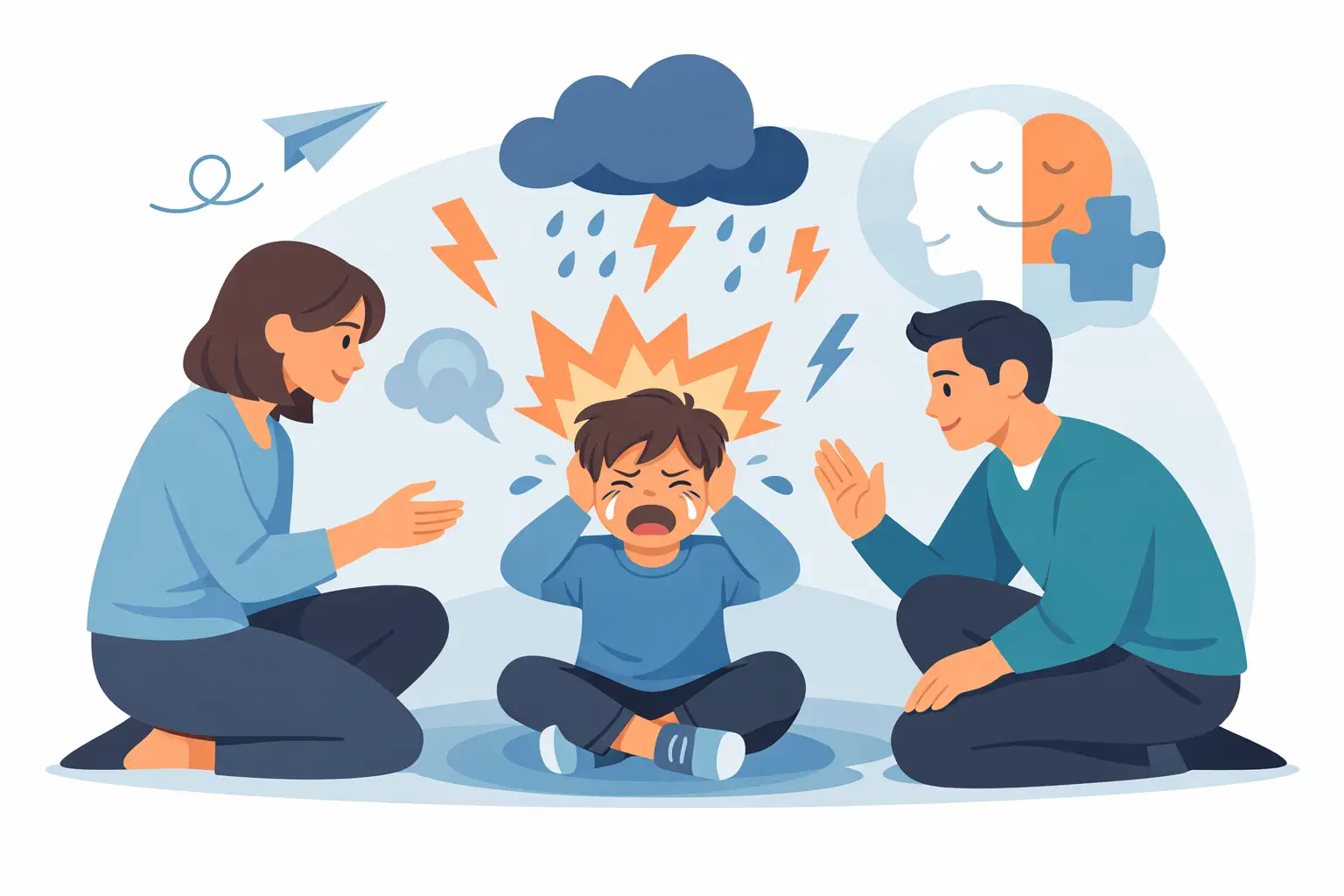
    You are not dealing with a child who is lazy, defiant, or impossible. You are dealing with a nervous system that struggles with regulation, impulse control, transitions, and consistency. That distinction changes everything.

    If your home feels loud, repetitive, and exhausting – the same reminders, the same arguments, the same meltdowns – you do not need more guilt. You need a better operating system. Learning how to parent a child with ADHD is not about becoming endlessly patient or perfectly calm. It is about using high-leverage strategies that match how your child’s brain actually works.

    The parents who see the fastest improvement stop relying on willpower, lectures, and punishment-heavy discipline. They replace those habits with structure, predictability, and clear behavioral feedback. That is where stability starts.

    How to parent a child with ADHD without losing control

    The first shift is this: stop expecting consistency from a child who cannot yet create it alone. ADHD affects executive function, which means your child may know what to do and still fail to do it in the moment. That gap is not character failure. It is a support problem.

    This is why so many parents feel confused. Your child can focus intensely on one thing, then fall apart over shoes, homework, or brushing teeth. From the outside, it looks selective. In reality, interest-based attention is a hallmark of ADHD. Tasks that are boring, repetitive, or poorly timed often trigger resistance fast.

    So parenting has to become more externalized. Instead of saying, “You know what to do,” build systems your child can see, follow, and repeat. Instead of escalating after the fourth reminder, reduce the need for four reminders in the first place.

    That means fewer speeches and more cues. Fewer vague commands and more specific steps. Fewer power struggles and more routines that run on autopilot.

    The ADHD parenting framework that works at home

    When parents ask how to parent a child with ADHD, they often want one magic tactic. There is no single fix. There is a pattern that works, and it is practical.

    Think in five parts: regulate, simplify, structure, reinforce, and repair.

    Regulate first, then correct

    A dysregulated child cannot absorb a lesson. If your child is yelling, crying, running, slamming doors, or arguing in circles, that is not the moment for a long correction. Their brain is in defense mode.

    Your first job is to bring the temperature down. Lower your voice. Reduce words. Remove extra stimulation if possible. Give one short instruction at a time. For some children, physical proximity helps. For others, space works better. It depends on the child and the moment.

    This matters for parents too. If you are already flooded, you will default to threats, sarcasm, or repeated commands that make things worse. Calm is not weakness. Calm is behavioral control.

    Simplify what you say

    Many children with ADHD stop processing when directions come in long strings. A parent says, “Go upstairs, put your backpack away, change your clothes, wash your hands, and come down for dinner,” then gets frustrated when none of it happens. That is too much information.

    Cut directions down. Make them concrete. Say the first step, then the next. If needed, have your child repeat it back. Eye contact can help, but not every child can hold eye contact and process language at the same time, so do not force it if it backfires.

    Clear beats detailed. Specific beats emotional.

    Build structure your child can lean on

    Children with ADHD usually do better when the environment carries the load. Routines reduce decision fatigue. Visual checklists reduce verbal nagging. Timers create urgency without parental conflict. Transition warnings prevent blowups.

    This is where many households turn around quickly. Morning and bedtime are common failure points because they require sequencing, focus, and time awareness – all hard for an ADHD brain. A simple routine chart, the same order every day, and a visible timer can reduce friction fast.

    Do not confuse structure with rigidity. Some children need very firm routines. Others need flexibility inside a stable frame. The goal is not a military household. The goal is a home where expectations are obvious and repeatable.

    Reinforce what you want repeated

    If most of your attention shows up after bad behavior, bad behavior will dominate family life. Children with ADHD often receive constant correction, which can erode motivation and self-image. They start expecting to fail, so they stop trying.

    You need fast, visible reinforcement for the behaviors you want more of. Praise should be immediate and specific. Instead of “good job,” say, “You started your homework without arguing,” or “You came back the first time I called.” That tells the brain exactly what earned the positive response.

    For some kids, praise is enough. For others, external rewards help at first. Sticker charts, points, extra privileges, or small earned incentives can be effective when they are tied to a few clear behaviors. The trade-off is that reward systems must stay simple. If the system becomes complicated, parents stop using it and kids stop trusting it.

    Repair after hard moments

    Even in a well-run home, there will be rough days. Parenting a child with ADHD does not mean preventing every meltdown or mistake. It means shortening the recovery time and protecting the relationship.

    After conflict, come back and repair. Talk briefly about what happened, what your child can do next time, and what support will help. Skip the shame. Shame does not build self-control. It builds secrecy, anger, and hopelessness.

    A child who believes, “I mess up and we recover,” is in a much stronger position than a child who believes, “I always ruin everything.” That mindset difference affects behavior more than many parents realize.

    Discipline for ADHD has to be different

    Traditional discipline often fails because it assumes delayed consequences will shape future behavior. But many children with ADHD struggle to connect a consequence later with a choice made earlier. That is why long punishments, vague warnings, and constant grounding often produce more resentment than change.

    Effective discipline is immediate, predictable, and proportionate. If a rule is broken, the consequence should be clear and short enough that your child can connect it to the behavior. The point is not to make them suffer. The point is to teach cause and effect.

    This is also where parents need to watch for overcorrection. If every forgotten item, every interruption, and every emotional spike gets treated as willful misbehavior, the home becomes hostile. Some behaviors need correction. Some need skill-building. Knowing the difference is a major part of learning how to parent a child with ADHD.

    Ask yourself one direct question: is this disobedience, or is this lagging capacity? Sometimes it is both. But if you misread a skill deficit as defiance every time, you will punish problems your child cannot yet solve alone.

    What helps most in everyday life

    The biggest gains usually come from a handful of practical changes done consistently.

    Use routines for the hardest parts of the day. Reduce clutter where your child works or gets ready. Give transition warnings before stopping an activity. Keep expectations visible, not just spoken. Break homework into short blocks. Protect sleep as much as possible because overtired ADHD symptoms often look worse. And when medication or therapy is part of the plan, treat those supports seriously rather than as a last resort.

    If you are parenting with a partner, alignment matters. One parent cannot run a stable system while the other improvises constantly. You do not need identical personalities, but you do need shared rules, shared language, and shared follow-through.

    If school is a major pressure point, document patterns. Notice when problems happen, what triggers them, and what support changes outcomes. That gives you better information for teachers, therapists, and pediatric providers. Specific data beats emotional generalizations every time.

    What your child needs from you most

    Your child needs leadership more than lectures. They need a parent who can separate the child from the symptoms, hold firm boundaries without humiliation, and create enough consistency that the household stops feeling like a daily emergency.

    That does not mean being perfect. It means being strategic. Fast improvement often comes from doing fewer things, better. One calm routine is better than five abandoned systems. One clear consequence is better than ten empty threats. One week of consistent reinforcement can change the emotional tone of a home more than another month of arguing.

    If you want a faster, more structured path, resources like the ADHD parenting tools at Emily Carter-Wells are designed for exactly this kind of family pressure – practical, evidence-based steps that help you regain control quickly.

    Your child does not need a parent who has all the answers. They need a parent who is willing to stop the chaos, build a system, and lead with confidence until calm becomes normal again.