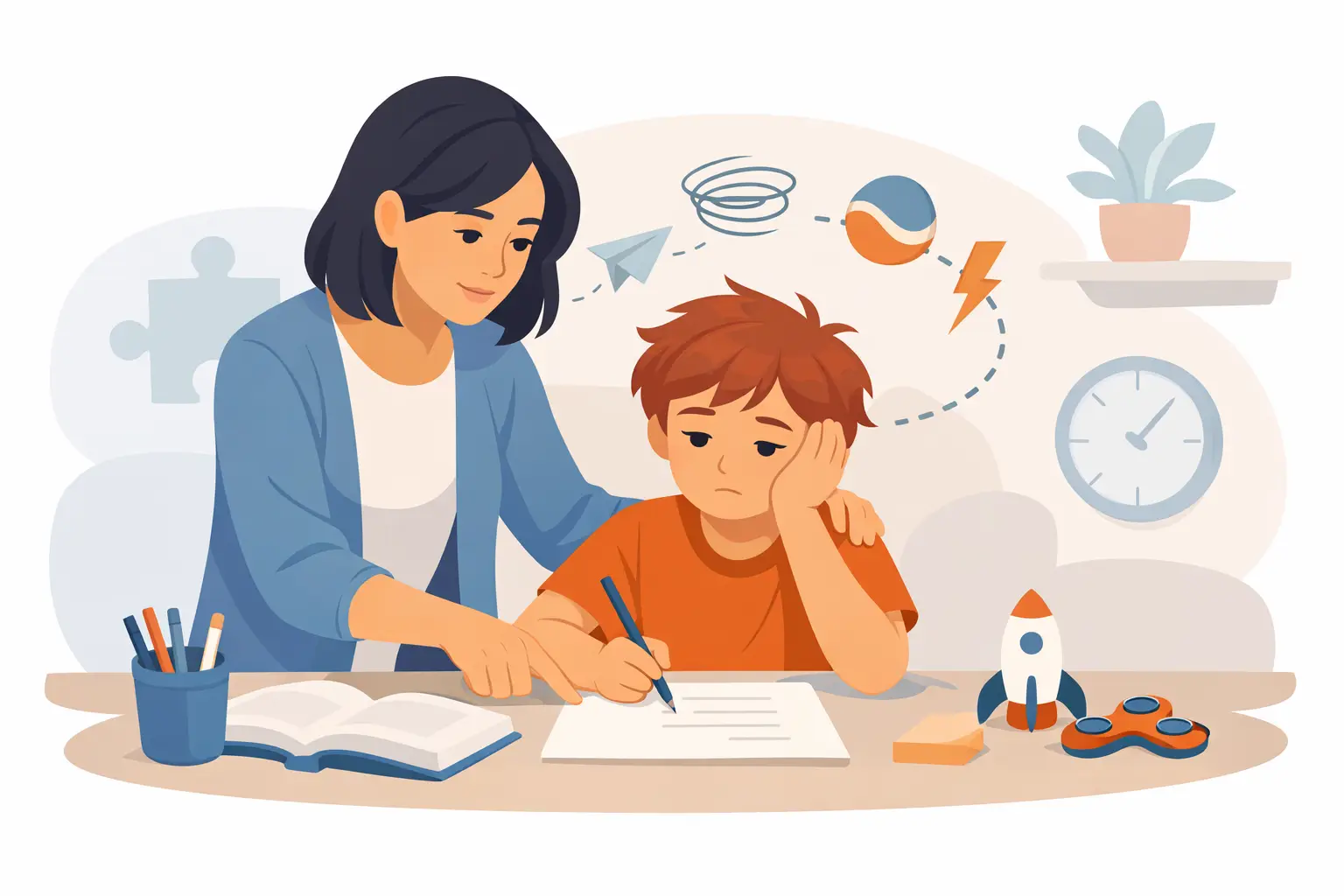
You are not dealing with a child who is lazy, defiant, or impossible. You are dealing with a nervous system that struggles with regulation, impulse control, transitions, and consistency. That distinction changes everything.
If your home feels loud, repetitive, and exhausting – the same reminders, the same arguments, the same meltdowns – you do not need more guilt. You need a better operating system. Learning how to parent a child with ADHD is not about becoming endlessly patient or perfectly calm. It is about using high-leverage strategies that match how your child’s brain actually works.
The parents who see the fastest improvement stop relying on willpower, lectures, and punishment-heavy discipline. They replace those habits with structure, predictability, and clear behavioral feedback. That is where stability starts.
How to parent a child with ADHD without losing control
The first shift is this: stop expecting consistency from a child who cannot yet create it alone. ADHD affects executive function, which means your child may know what to do and still fail to do it in the moment. That gap is not character failure. It is a support problem.
This is why so many parents feel confused. Your child can focus intensely on one thing, then fall apart over shoes, homework, or brushing teeth. From the outside, it looks selective. In reality, interest-based attention is a hallmark of ADHD. Tasks that are boring, repetitive, or poorly timed often trigger resistance fast.
So parenting has to become more externalized. Instead of saying, “You know what to do,” build systems your child can see, follow, and repeat. Instead of escalating after the fourth reminder, reduce the need for four reminders in the first place.
That means fewer speeches and more cues. Fewer vague commands and more specific steps. Fewer power struggles and more routines that run on autopilot.
The ADHD parenting framework that works at home
When parents ask how to parent a child with ADHD, they often want one magic tactic. There is no single fix. There is a pattern that works, and it is practical.
Think in five parts: regulate, simplify, structure, reinforce, and repair.
Regulate first, then correct
A dysregulated child cannot absorb a lesson. If your child is yelling, crying, running, slamming doors, or arguing in circles, that is not the moment for a long correction. Their brain is in defense mode.
Your first job is to bring the temperature down. Lower your voice. Reduce words. Remove extra stimulation if possible. Give one short instruction at a time. For some children, physical proximity helps. For others, space works better. It depends on the child and the moment.
This matters for parents too. If you are already flooded, you will default to threats, sarcasm, or repeated commands that make things worse. Calm is not weakness. Calm is behavioral control.
Simplify what you say
Many children with ADHD stop processing when directions come in long strings. A parent says, “Go upstairs, put your backpack away, change your clothes, wash your hands, and come down for dinner,” then gets frustrated when none of it happens. That is too much information.
Cut directions down. Make them concrete. Say the first step, then the next. If needed, have your child repeat it back. Eye contact can help, but not every child can hold eye contact and process language at the same time, so do not force it if it backfires.
Clear beats detailed. Specific beats emotional.
Build structure your child can lean on
Children with ADHD usually do better when the environment carries the load. Routines reduce decision fatigue. Visual checklists reduce verbal nagging. Timers create urgency without parental conflict. Transition warnings prevent blowups.
This is where many households turn around quickly. Morning and bedtime are common failure points because they require sequencing, focus, and time awareness – all hard for an ADHD brain. A simple routine chart, the same order every day, and a visible timer can reduce friction fast.
Do not confuse structure with rigidity. Some children need very firm routines. Others need flexibility inside a stable frame. The goal is not a military household. The goal is a home where expectations are obvious and repeatable.
Reinforce what you want repeated
If most of your attention shows up after bad behavior, bad behavior will dominate family life. Children with ADHD often receive constant correction, which can erode motivation and self-image. They start expecting to fail, so they stop trying.
You need fast, visible reinforcement for the behaviors you want more of. Praise should be immediate and specific. Instead of “good job,” say, “You started your homework without arguing,” or “You came back the first time I called.” That tells the brain exactly what earned the positive response.
For some kids, praise is enough. For others, external rewards help at first. Sticker charts, points, extra privileges, or small earned incentives can be effective when they are tied to a few clear behaviors. The trade-off is that reward systems must stay simple. If the system becomes complicated, parents stop using it and kids stop trusting it.
Repair after hard moments
Even in a well-run home, there will be rough days. Parenting a child with ADHD does not mean preventing every meltdown or mistake. It means shortening the recovery time and protecting the relationship.
After conflict, come back and repair. Talk briefly about what happened, what your child can do next time, and what support will help. Skip the shame. Shame does not build self-control. It builds secrecy, anger, and hopelessness.
A child who believes, “I mess up and we recover,” is in a much stronger position than a child who believes, “I always ruin everything.” That mindset difference affects behavior more than many parents realize.
Discipline for ADHD has to be different
Traditional discipline often fails because it assumes delayed consequences will shape future behavior. But many children with ADHD struggle to connect a consequence later with a choice made earlier. That is why long punishments, vague warnings, and constant grounding often produce more resentment than change.
Effective discipline is immediate, predictable, and proportionate. If a rule is broken, the consequence should be clear and short enough that your child can connect it to the behavior. The point is not to make them suffer. The point is to teach cause and effect.
This is also where parents need to watch for overcorrection. If every forgotten item, every interruption, and every emotional spike gets treated as willful misbehavior, the home becomes hostile. Some behaviors need correction. Some need skill-building. Knowing the difference is a major part of learning how to parent a child with ADHD.
Ask yourself one direct question: is this disobedience, or is this lagging capacity? Sometimes it is both. But if you misread a skill deficit as defiance every time, you will punish problems your child cannot yet solve alone.
What helps most in everyday life
The biggest gains usually come from a handful of practical changes done consistently.
Use routines for the hardest parts of the day. Reduce clutter where your child works or gets ready. Give transition warnings before stopping an activity. Keep expectations visible, not just spoken. Break homework into short blocks. Protect sleep as much as possible because overtired ADHD symptoms often look worse. And when medication or therapy is part of the plan, treat those supports seriously rather than as a last resort.
If you are parenting with a partner, alignment matters. One parent cannot run a stable system while the other improvises constantly. You do not need identical personalities, but you do need shared rules, shared language, and shared follow-through.
If school is a major pressure point, document patterns. Notice when problems happen, what triggers them, and what support changes outcomes. That gives you better information for teachers, therapists, and pediatric providers. Specific data beats emotional generalizations every time.
What your child needs from you most
Your child needs leadership more than lectures. They need a parent who can separate the child from the symptoms, hold firm boundaries without humiliation, and create enough consistency that the household stops feeling like a daily emergency.
That does not mean being perfect. It means being strategic. Fast improvement often comes from doing fewer things, better. One calm routine is better than five abandoned systems. One clear consequence is better than ten empty threats. One week of consistent reinforcement can change the emotional tone of a home more than another month of arguing.
If you want a faster, more structured path, resources like the ADHD parenting tools at Emily Carter-Wells are designed for exactly this kind of family pressure – practical, evidence-based steps that help you regain control quickly.
Your child does not need a parent who has all the answers. They need a parent who is willing to stop the chaos, build a system, and lead with confidence until calm becomes normal again.
Leave a Reply