Category: ADHD Parenting

  • What Really Causes Toddler Meltdowns?

    What Really Causes Toddler Meltdowns?

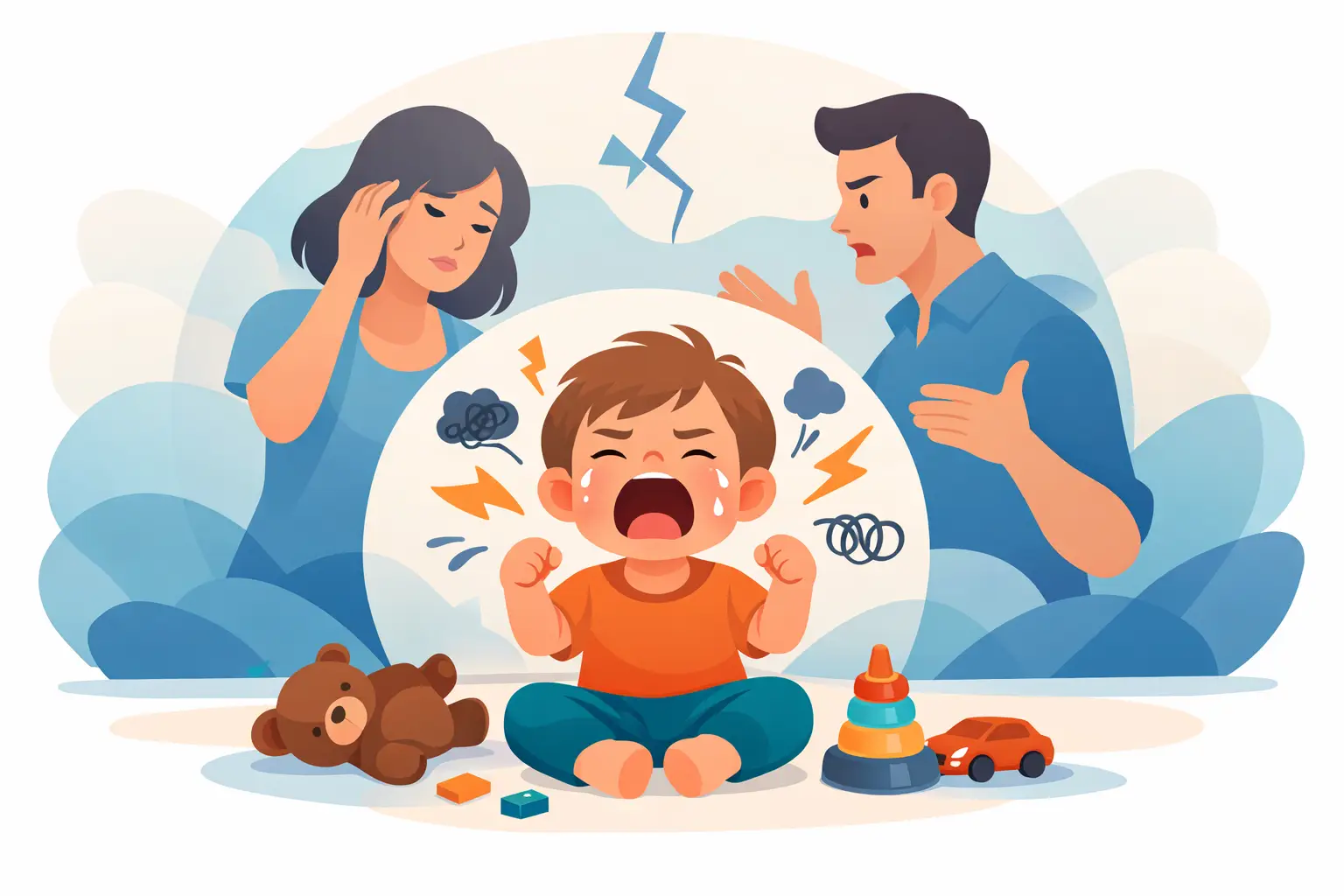
    You said no to the blue cup, and now your toddler is on the kitchen floor screaming like the world just ended.

    That does not mean you are doing parenting wrong. It means you are dealing with a nervous system problem, not a character problem. If you want calmer days, you need to stop treating meltdowns like defiance and start reading them like overload.

    What causes toddler meltdowns?

    The short answer is this: toddler meltdowns happen when a young child is hit with more emotion, frustration, stimulation, or fatigue than their developing brain can handle in that moment.

    Toddlers do not have mature impulse control. They do not have strong emotional regulation. They do not have the language to clearly explain what is wrong before the situation explodes. When pressure builds faster than their skills can keep up, the meltdown shows up.

    That is why smart, loving, well-parented toddlers still fall apart over small things. The cracker broke. The sock feels wrong. You buckled the car seat too soon. These moments look irrational to adults, but they are often the final trigger on top of an already overloaded system.

    If you have been asking what causes toddler meltdowns in your home, the answer is usually not one single thing. It is a stack of factors.

    The 7 biggest meltdown drivers

    1. Overtiredness

    Fatigue is one of the fastest routes to chaos. A tired toddler has less frustration tolerance, weaker listening skills, and a much lower threshold for disappointment.

    This is why meltdowns often spike late afternoon, before naps, after bad sleep, during travel, or in seasons of schedule disruption. If your child is melting down over things they usually handle well, sleep debt may be the real problem.

    Parents often miss this because they focus on the visible trigger. The toy was taken away. The snack was denied. But the real issue may be that the child had already been running on empty for hours.

    2. Hunger and blood sugar crashes

    A hungry toddler is rarely a reasonable negotiator. When blood sugar drops, patience drops with it.

    This can create meltdowns that seem sudden and extreme. One minute your child is fine, the next they are sobbing because their banana peeled the wrong way. Again, the banana is usually not the full story.

    This does not mean you solve every hard moment with snacks. It does mean you respect the biology. Regular meals and strategic snack timing can prevent a surprising amount of drama.

    3. Overstimulation

    Toddlers are still learning how to filter noise, activity, transitions, bright lights, crowded spaces, and constant input. A fun day can turn into a disaster simply because their system took in too much.

    Birthday parties, errands, family gatherings, restaurants, and even a noisy home can push some children past their limit. This varies by child. One toddler is energized by busy environments. Another is flattened by them.

    This is where parents need nuance. If your child melts down after every packed day, the issue may not be behavior. It may be sensory overload.

    4. Frustration without the skills to express it

    Toddlers want a lot of control and have very little power. They also have big ideas and limited ability. That gap creates frustration constantly.

    They may want to zip the jacket but cannot. They may know what they mean but cannot find the words. They may want independence and still need help. That tension is fertile ground for meltdowns.

    This is especially true during language growth spurts. A child who understands far more than they can say often gets overwhelmed quickly because their brain is ahead of their communication.

    5. Transitions and loss of control

    Toddlers do not usually melt down because a transition exists. They melt down because the transition feels abrupt, imposed, and out of their control.

    Leaving the park, turning off the TV, getting into the bath, getting out of the bath, stopping play to eat dinner – these are classic flashpoints because they force a shift before the child feels ready.

    Young children thrive on predictability. When life feels like adults constantly moving them from one thing to the next, resistance climbs. A meltdown can become their last available tool to protest the change.

    6. Big feelings they cannot regulate yet

    Toddlers feel emotion intensely. Excitement, disappointment, jealousy, fear, embarrassment, anger, and sadness can all hit hard and fast.

    Adults often label only angry outbursts as meltdowns, but many meltdowns begin with grief or overwhelm. A sibling gets attention. A parent leaves the room. A routine changes. A favorite object is missing. The child does not calmly process the disappointment. Their body reacts.

    This matters because your response changes everything. If you treat a flooded child like a manipulative child, you often escalate the episode.

    7. Inconsistent boundaries

    This one is harder to hear, but it matters. Sometimes meltdowns get stronger because the environment is inconsistent.

    If a child sometimes gets the candy after screaming, sometimes gets ignored, sometimes gets a lecture, and sometimes gets a parent who explodes, the pattern becomes unstable. Unstable patterns increase testing, anxiety, and emotional intensity.

    Clear boundaries do not cause more meltdowns long term. They reduce confusion. At first, consistency can bring pushback because your child notices the system changed. But over time, predictable limits create safety.

    Why meltdowns happen more with parents

    Many parents quietly wonder why daycare says their child was “great all day” while home feels like a battlefield.

    That is normal. Toddlers often unravel most with the adults they trust most. Home is where they release accumulated stress. It is also where boundaries are most emotionally loaded because attachment is strongest.

    This does not mean your child is targeting you in a calculated way. It means you are their safest place to fall apart. That truth can be painful, but it is also useful. When you stop taking meltdowns personally, you can respond with much more control.

    What causes toddler meltdowns to get worse?

    The original trigger matters, but escalation is usually shaped by the adult response.

    Fast talking, repeated commands, threats, lectures, arguing, and trying to force logic into a dysregulated moment usually backfire. A toddler in full meltdown is not in a learning state. They are in a survival state. Their brain is not ready for a speech about choices and consequences.

    This does not mean you give in. It means you shift your goal. In the peak of the storm, the goal is regulation first, teaching second.

    It also helps to stop asking too many questions in the moment. “Why are you doing this?” and “What is wrong with you?” add pressure. A calmer script is more effective: “You’re upset. I’m here. We’re going to get calm first.”

    The control method: prevent, spot, respond

    If you want fewer meltdowns, use a simple three-part framework.

    First, prevent what you can. Protect sleep, keep meals predictable, reduce unnecessary transitions, and build in decompression after overstimulating events. Prevention is not weakness. It is high-leverage parenting.

    Second, spot the early signs. Most toddlers do not go from calm to chaos in one second. They get whiny, rigid, clingy, loud, impulsive, or impossible over small things. That is your warning window. Move in early with co-regulation, not correction.

    Third, respond without feeding the fire. Stay close, keep language short, hold the boundary, and lower the emotional temperature. If the answer is no, let it stay no. If your child is overwhelmed, help their body settle before trying to teach the lesson.

    This is where evidence-based parenting beats guesswork. You do not need more guilt. You need a repeatable system.

    When to look deeper

    Most toddler meltdowns are developmentally normal. Still, context matters.

    If meltdowns are unusually intense, very long, happening many times a day, tied to major sensory issues, paired with sleep disruption, or accompanied by language delays or aggressive behavior far beyond typical toddler frustration, it may be worth a deeper evaluation. Sometimes what looks like “bad behavior” is a sign of an unmet developmental or sensory need.

    The goal is not to panic. The goal is accuracy. The better you understand the driver, the faster you can make effective changes.

    If you want structured, fast-acting tools for behavior and household calm, resources like the parenting frameworks at Emily Carter-Wells are built for exactly this kind of high-stress pattern interruption.

    Your toddler is not giving you a hard time. Most days, they are having a hard time in a small body with limited skills. When you identify the real cause instead of fighting the surface behavior, you take back control and give your child something even more valuable – a calmer path back to regulation.
  • How to Stop Sibling Fighting Fast

    How to Stop Sibling Fighting Fast

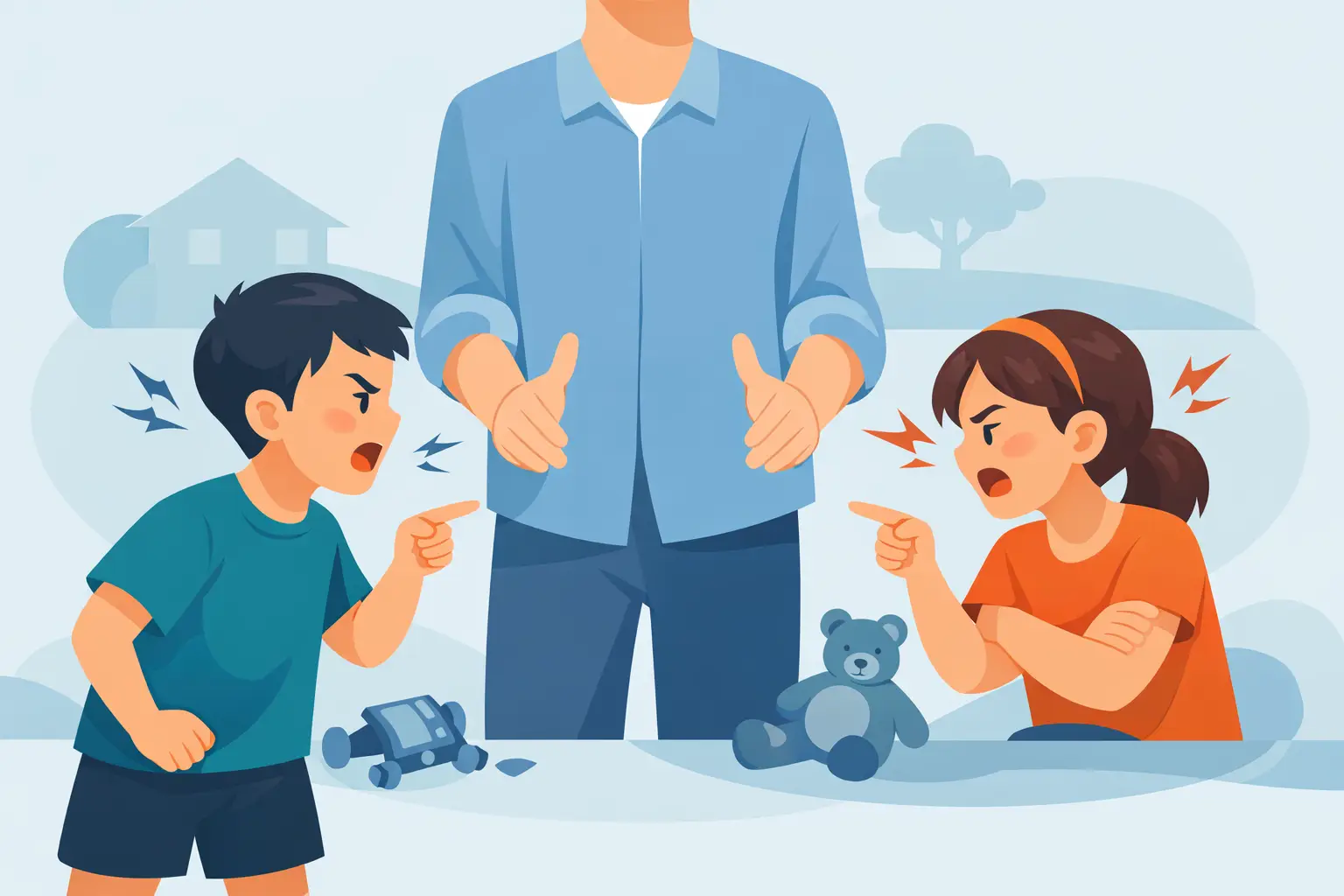
    The fight usually starts over nothing.

    A look. A toy. Who sat in the “wrong” spot. Then suddenly one child is screaming, the other is denying everything, and you are standing in the kitchen thinking, I cannot do this ten more times today.

    You can. But not with more yelling, more lectures, or more empty warnings. If you want to know how to stop sibling fighting, you need a system that lowers conflict at the source. Fast relief comes from structure, not speeches.

    Why sibling fights keep happening

    Most sibling conflict is not random. It follows a pattern. Children fight when the environment rewards competition, when boundaries are unclear, when one child feels chronically powerless, or when both kids have learned that conflict gets immediate attention.

    That does not mean you caused it. It means there are leverage points you can control.

    Parents often make the same understandable mistake. They wait until the fight explodes, then try to solve it in the heat of the moment. That almost never works. A dysregulated child is not in learning mode. An offended sibling is not interested in fairness. And a stressed parent usually defaults to repeating the same phrases that have already lost power.

    The goal is not to make siblings love every minute together. That is not realistic. The goal is to stop the chaos, reduce the frequency and intensity of fights, and teach your children how to recover without turning your home into a battleground.

    How to stop sibling fighting by changing the pattern

    Start with one principle: do not treat every fight like a separate emergency. Treat it like a repeated system failure.

    When you shift from reaction to prevention, everything gets clearer. You stop asking, “Who started it?” and start asking, “What setup keeps producing this result?” That question gives you power.

    There are four high-leverage areas to fix: predictability, separation, coaching, and consequences. If even one of these is missing, conflict keeps recycling.

    1. Increase predictability before conflict starts

    Sibling fights spike during transitions, boredom, hunger, fatigue, and unstructured shared time. In plain language, kids fight more when they do not know what is happening next or when they have too much access to each other without enough support.

    Set clearer rhythms. If after-school time is always rough, build a routine that removes decision fatigue. Snack first. Quiet time second. Shared play later. If mornings are the danger zone, separate tasks and reduce unnecessary contact until everyone is dressed and fed.

    This is not over-parenting. It is smart behavioral management. Children do better when the environment does more of the work.

    2. Stop forcing too much togetherness

    Many parents assume siblings should learn to work it out by spending more time together. Sometimes the opposite is true.

    If your kids are in a high-conflict season, give them strategic separation. Separate play spaces. Separate seats in the car. Separate turns with high-value toys. More physical and emotional space often reduces friction immediately.

    This is especially important when there is a large age gap, a temperament mismatch, or one child is more rigid, impulsive, or easily overstimulated. Equal treatment is not always effective treatment. Give each child what helps them succeed.

    3. Coach skills when nobody is mad

    Do not save all teaching for the fight itself. If you want better behavior under pressure, rehearse the skill outside the pressure.

    That means practicing what to say instead of grabbing. Practicing how to ask for a turn. Practicing how to walk away. Practicing how to get a parent without tattling for sport.

    Keep it short and direct. “Say, ‘I am using that. You can have it when I am done.’” Or, “If your brother is bothering you, your job is to move your body first, not hit first.” These are concrete scripts. Children can actually use them.

    Long moral lessons fail because they are too abstract. Specific replacement behaviors win.

    4. Use consequences that target the real problem

    If the same fight happens every day, your consequence is not strong enough, not clear enough, or not connected enough to the behavior.

    Consequences should be immediate, boring, and predictable. If a child cannot handle shared crayons without screaming, the crayons get removed for a period of time. If rough physical behavior starts during couch play, couch play ends. If both children escalate instead of using words, both lose access to the activity.

    That last part matters. Parents often get stuck trying to deliver courtroom justice in five seconds. You do not need a legal trial. You need household order. If both children contributed to the chaos, both can lose the privilege.

    What to do in the moment when a fight breaks out

    This is where most parents either regain control or accidentally feed the cycle.

    First, regulate the room. Lower your voice. Move your body between the children if needed. Separate first, investigate second. Safety before fairness.

    Second, do not demand instant apologies. Forced apologies under stress are performative. They do not build empathy, and kids know it. Focus on stopping the behavior and resetting nervous systems.

    Third, keep your words short. “Stop. Separate. Hands down.” Then deal with each child one at a time. The more you talk into chaos, the less your words matter.

    Fourth, avoid turning one child into the permanent villain and the other into the permanent victim. That family role assignment becomes its own problem. Even when one child is more aggressive, each child needs accountability without identity damage.

    A better script sounds like this: “I will not let you hit. You are taking a break.” Then later: “Next time, use your words or leave the room. Hitting loses the activity every time.” Clear. Calm. Final.

    The mistake that keeps parents stuck

    The biggest mistake is inconsistency.

    If some days you ignore teasing, some days you explode, and some days you negotiate for twenty minutes, your children learn that conflict is a variable-reward machine. And variable rewards are powerful. They keep behavior alive.

    Your job is not to produce a perfect response. Your job is to produce a repeatable one.

    That means your household needs a simple conflict plan. For example: no hitting, no name-calling, no grabbing. If those happen, separation is immediate and the activity ends. If children want the item, they use a turn system. If they cannot recover, they lose access to shared play for the rest of that block of time.

    You do not need twenty rules. You need a few proven methods enforced every single time.

    When sibling fighting means something deeper

    Sometimes sibling conflict is not just ordinary rivalry. It may be intensified by ADHD, sensory overload, anxiety, sleep deprivation, major life changes, or one child feeling repeatedly compared, corrected, or overlooked.

    This is where nuance matters.

    If one child has impulse control challenges, a lecture about kindness will not solve a neurological regulation issue. If one child is constantly invading space because they crave connection, pure punishment may increase the behavior. If a younger child keeps ruining an older sibling’s things, the answer may be better protection of property, not just repeated reminders to share.

    Behavior always tells a story. You do not need to overanalyze it, but you do need to respect it.

    That is why fast results usually come from a mix of firm boundaries and better diagnosis. Not every child needs the same correction. One may need tighter supervision. Another may need more one-on-one attention. Another may need fewer opportunities for conflict in the first place.

    How to stop sibling fighting without becoming the referee all day

    The end goal is not parental micromanagement. It is self-control.

    To get there, reduce the number of fights you fully mediate. For lower-level conflict, coach once and step back. “You both want the same toy. Solve it with turns or it goes away.” That teaches responsibility. But do not step back from aggression, intimidation, or repeated targeting. Those need strong adult intervention.

    It helps to notice which problems are “kid-sized” and which are not. Mild frustration, competing preferences, and short disputes can become learning opportunities. Physical aggression, humiliation, and relentless provocation are too big to leave to children.

    If your home has been tense for a while, expect resistance at first. Children often push harder when the system changes because they are testing whether you mean it. Stay steady anyway. Calm authority feels different from chaos, and kids usually trust it faster than they show it.

    If you want more structured, evidence-based family tools, Emily Carter-Wells offers practical blueprints designed to create noticeable household calm quickly.

    You do not need your children to be best friends by Friday. You need fewer explosions, clearer limits, and a home that feels safe again. That starts with one decision: stop managing each fight like a surprise, and start leading your household like the pattern can change.

  • A Better After-School Routine for ADHD

    A Better After-School Routine for ADHD

    3:15 p.m. hits, your child walks through the door, and the whole house seems to tighten. Shoes get kicked off in the middle of the floor. A snack turns into a negotiation. Homework becomes a battle. By dinner, everyone is overstimulated, frustrated, and one small request can set off a full meltdown.

    That pattern is common for ADHD, but it is not inevitable.

    A strong after school routine for adhd child needs to do one thing first: lower the nervous system load before you ask for performance. Most parents are told to focus on compliance right away. That usually backfires. Your child has already spent hours managing noise, transitions, social pressure, academic demands, and self-control. By the time they get home, they are running on fumes.

    If you want calmer afternoons fast, stop treating after school like a second school day. Build it like a recovery-and-reset system. That is what creates better behavior, smoother homework, and less evening chaos.

    Why the after-school window gets so hard

    ADHD kids often hold it together at school and fall apart at home. Parents misread that as manipulation, but the real issue is effort fatigue. School requires constant regulation – staying seated, tracking instructions, filtering distractions, switching tasks, managing emotions, and masking stress. Home is where the strain finally shows.

    There is also a timing problem. Many children come home hungry, mentally depleted, and sensitive to demands. If medication is wearing off in the late afternoon, that adds another layer. A child who looked mostly regulated at 1 p.m. may be far more impulsive, emotional, or oppositional by 4 p.m.

    That is why generic advice like “just be consistent” is not enough. Consistency matters, but the sequence matters more. If your routine starts with correction, homework pressure, or too many verbal directions, you are setting up a fight.

    The 4-part after school routine for adhd child

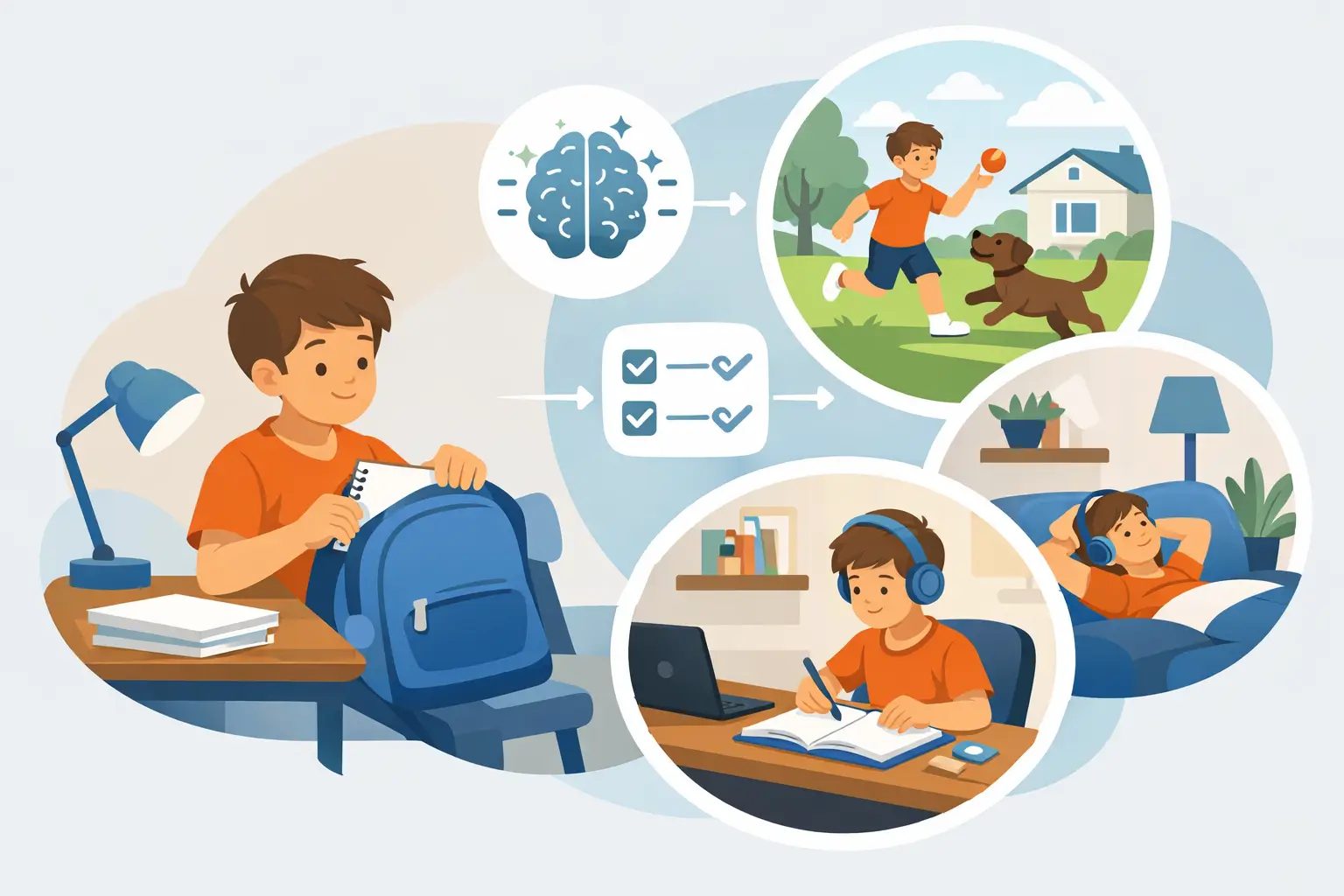
    The most effective routine is simple. Not easy, but simple. It has four phases: decompress, refuel, move, then work. This order is high-leverage because it respects how ADHD brains recover.

    1. Decompress before you direct

    The first 15 to 30 minutes after school should not start with questions, chores, or homework reminders. This is the reset window.

    That does not mean unlimited screen time or total chaos. It means low-demand decompression. Some kids need quiet. Some need sensory input. Some need to pace, build with Legos, sit under a weighted blanket, listen to music, or simply not talk.

    Your job here is to remove pressure, not remove structure. A simple script works well: “You’re home. First we reset, then snack, then movement, then homework.” That gives predictability without starting a power struggle.

    If your child tends to explode the second they get home, reduce language even more. Too much talking can feel like one more demand. Use a visual schedule if needed. ADHD kids often respond better to what they can see than what they are told repeatedly.

    2. Refuel early, not later

    A lot of after-school conflict is really blood sugar plus exhaustion wearing an ADHD label.

    Give a protein-forward snack early and make it automatic. When snack is predictable, you remove one major friction point. Think cheese and crackers, Greek yogurt, apple slices with peanut butter, turkey roll-ups, or a smoothie. The exact snack matters less than the routine around it.

    Do not turn snack into a new decision battlefield. If your child struggles with transitions, offer two standard options and keep rotating from a short list. Too many choices can create more dysregulation, not less.

    3. Use movement as treatment, not a reward

    Many parents hold movement until after homework is done. For ADHD, that can be the wrong order.

    Movement improves attention, mood regulation, and transition readiness. It can be 10 minutes on a trampoline, a scooter ride, basketball in the driveway, dancing in the living room, jumping jacks, walking the dog, or carrying groceries inside. What matters is that the body gets a chance to discharge stress.

    If your child comes home wired, movement should be non-negotiable. Not as punishment. Not as something they have to earn. As part of the regulation blueprint.

    There is one trade-off here. Some kids get more revved up with rough play or competitive sports right before homework. If that is your child, use calmer movement like walking, stretching, or a sensory circuit instead. The principle stays the same, but the intensity depends on the child.

    4. Start work with a short win

    Homework should not begin with the hardest subject, the longest worksheet, or your child’s weakest area. Start with a fast win to build momentum.

    That might mean one easy page, five math facts, reading for eight minutes, or packing the backpack before starting written work. Momentum matters because ADHD brains often resist task initiation more than the task itself.

    Use short work blocks. Ten to twenty minutes is realistic for many children, especially in elementary and middle school. Then give a brief break. A visual timer helps because it removes the constant “how much longer?” battle.

    Keep your directions tight. One instruction at a time. “Get your folder.” Pause. “Open to the first page.” Pause. “Do numbers one through three.” Long explanations tend to create shutdown or distraction.

    What parents should stop doing

    If your afternoons feel explosive, there are usually a few hidden patterns making it worse.

    First, stop front-loading demands the minute your child gets home. Questions like “How was your day?” can wait if your child is dysregulated. So can lectures about the behavior report from school.

    Second, stop changing the plan every day. ADHD kids do better when the rhythm is boringly predictable. The routine does not need to be perfect. It needs to be repeatable.

    Third, stop using threats as your main transition tool. “If you don’t start now, no screens all night” might get compliance sometimes, but it usually raises emotional intensity and burns trust. Calm authority works better than constant escalation.

    Fourth, stop expecting verbal reminders to do all the work. If you are repeating the same instruction five times every afternoon, the system is weak. Add visual cues, timers, snack stations, backpack hooks, or a printed routine card.

    How to make the routine stick within a week

    You do not need a complicated chart with 14 steps. You need a system your family can actually run on a hard day.

    Start by writing the routine in five words or less per step. For example: Home, Reset, Snack, Move, Homework. Post it where your child walks in. Then rehearse it when everyone is calm, not during a meltdown.

    Keep the timing consistent for five school days before judging it. Parents often abandon a good routine too early because day one still looks messy. That is normal. New systems usually get tested before they get accepted.

    Also, decide in advance what happens if your child resists. Not a huge punishment plan. Just a calm response. “This is the routine. First reset, then snack.” “This is the routine. First movement, then homework.” Predictable language reduces emotional leakage from the parent, and that matters more than most people realize.

    If evenings are still rough, look at the pressure points. Is homework happening too late? Is the snack too light? Is decompression accidentally turning into an hour of overstimulating screen use? Is medication timing part of the issue? Sometimes the routine is not failing. It just needs one adjustment.

    When an after-school routine needs more flexibility

    There is no single perfect after school routine for adhd child because not all ADHD presentations look the same.

    Some children need near-total silence for 20 minutes. Others regulate better through connection and want you nearby while they snack. Some can do homework before sports. Others will crash if they do not move first. Teenagers may need more ownership in building the schedule or they will reject it on principle.

    That is not inconsistency. That is strategy.

    The goal is not to control every minute. The goal is to reduce friction, lower stress, and create enough structure that your child can succeed more often than they spiral. That is how you take back the late afternoon without turning your home into a command center.

    If you want faster implementation, the best approach is always the one you can repeat with confidence. At Emily Carter-Wells, that is the standard: proven methods, clear structure, and practical change you can feel quickly.

    Your child does not need a perfect parent at 3:15 p.m. They need a predictable landing place. Build that, and the whole evening starts to change.

  • How to Parent a Child With ADHD

    How to Parent a Child With ADHD

    You are not dealing with a child who is lazy, defiant, or impossible. You are dealing with a nervous system that struggles with regulation, impulse control, transitions, and consistency. That distinction changes everything.

    If your home feels loud, repetitive, and exhausting – the same reminders, the same arguments, the same meltdowns – you do not need more guilt. You need a better operating system. Learning how to parent a child with ADHD is not about becoming endlessly patient or perfectly calm. It is about using high-leverage strategies that match how your child’s brain actually works.

    The parents who see the fastest improvement stop relying on willpower, lectures, and punishment-heavy discipline. They replace those habits with structure, predictability, and clear behavioral feedback. That is where stability starts.

    How to parent a child with ADHD without losing control

    The first shift is this: stop expecting consistency from a child who cannot yet create it alone. ADHD affects executive function, which means your child may know what to do and still fail to do it in the moment. That gap is not character failure. It is a support problem.

    This is why so many parents feel confused. Your child can focus intensely on one thing, then fall apart over shoes, homework, or brushing teeth. From the outside, it looks selective. In reality, interest-based attention is a hallmark of ADHD. Tasks that are boring, repetitive, or poorly timed often trigger resistance fast.

    So parenting has to become more externalized. Instead of saying, “You know what to do,” build systems your child can see, follow, and repeat. Instead of escalating after the fourth reminder, reduce the need for four reminders in the first place.

    That means fewer speeches and more cues. Fewer vague commands and more specific steps. Fewer power struggles and more routines that run on autopilot.

    The ADHD parenting framework that works at home

    When parents ask how to parent a child with ADHD, they often want one magic tactic. There is no single fix. There is a pattern that works, and it is practical.

    Think in five parts: regulate, simplify, structure, reinforce, and repair.

    Regulate first, then correct

    A dysregulated child cannot absorb a lesson. If your child is yelling, crying, running, slamming doors, or arguing in circles, that is not the moment for a long correction. Their brain is in defense mode.

    Your first job is to bring the temperature down. Lower your voice. Reduce words. Remove extra stimulation if possible. Give one short instruction at a time. For some children, physical proximity helps. For others, space works better. It depends on the child and the moment.

    This matters for parents too. If you are already flooded, you will default to threats, sarcasm, or repeated commands that make things worse. Calm is not weakness. Calm is behavioral control.

    Simplify what you say

    Many children with ADHD stop processing when directions come in long strings. A parent says, “Go upstairs, put your backpack away, change your clothes, wash your hands, and come down for dinner,” then gets frustrated when none of it happens. That is too much information.

    Cut directions down. Make them concrete. Say the first step, then the next. If needed, have your child repeat it back. Eye contact can help, but not every child can hold eye contact and process language at the same time, so do not force it if it backfires.

    Clear beats detailed. Specific beats emotional.

    Build structure your child can lean on

    Children with ADHD usually do better when the environment carries the load. Routines reduce decision fatigue. Visual checklists reduce verbal nagging. Timers create urgency without parental conflict. Transition warnings prevent blowups.

    This is where many households turn around quickly. Morning and bedtime are common failure points because they require sequencing, focus, and time awareness – all hard for an ADHD brain. A simple routine chart, the same order every day, and a visible timer can reduce friction fast.

    Do not confuse structure with rigidity. Some children need very firm routines. Others need flexibility inside a stable frame. The goal is not a military household. The goal is a home where expectations are obvious and repeatable.

    Reinforce what you want repeated

    If most of your attention shows up after bad behavior, bad behavior will dominate family life. Children with ADHD often receive constant correction, which can erode motivation and self-image. They start expecting to fail, so they stop trying.

    You need fast, visible reinforcement for the behaviors you want more of. Praise should be immediate and specific. Instead of “good job,” say, “You started your homework without arguing,” or “You came back the first time I called.” That tells the brain exactly what earned the positive response.

    For some kids, praise is enough. For others, external rewards help at first. Sticker charts, points, extra privileges, or small earned incentives can be effective when they are tied to a few clear behaviors. The trade-off is that reward systems must stay simple. If the system becomes complicated, parents stop using it and kids stop trusting it.

    Repair after hard moments

    Even in a well-run home, there will be rough days. Parenting a child with ADHD does not mean preventing every meltdown or mistake. It means shortening the recovery time and protecting the relationship.

    After conflict, come back and repair. Talk briefly about what happened, what your child can do next time, and what support will help. Skip the shame. Shame does not build self-control. It builds secrecy, anger, and hopelessness.

    A child who believes, “I mess up and we recover,” is in a much stronger position than a child who believes, “I always ruin everything.” That mindset difference affects behavior more than many parents realize.

    Discipline for ADHD has to be different

    Traditional discipline often fails because it assumes delayed consequences will shape future behavior. But many children with ADHD struggle to connect a consequence later with a choice made earlier. That is why long punishments, vague warnings, and constant grounding often produce more resentment than change.

    Effective discipline is immediate, predictable, and proportionate. If a rule is broken, the consequence should be clear and short enough that your child can connect it to the behavior. The point is not to make them suffer. The point is to teach cause and effect.

    This is also where parents need to watch for overcorrection. If every forgotten item, every interruption, and every emotional spike gets treated as willful misbehavior, the home becomes hostile. Some behaviors need correction. Some need skill-building. Knowing the difference is a major part of learning how to parent a child with ADHD.

    Ask yourself one direct question: is this disobedience, or is this lagging capacity? Sometimes it is both. But if you misread a skill deficit as defiance every time, you will punish problems your child cannot yet solve alone.

    What helps most in everyday life

    The biggest gains usually come from a handful of practical changes done consistently.

    Use routines for the hardest parts of the day. Reduce clutter where your child works or gets ready. Give transition warnings before stopping an activity. Keep expectations visible, not just spoken. Break homework into short blocks. Protect sleep as much as possible because overtired ADHD symptoms often look worse. And when medication or therapy is part of the plan, treat those supports seriously rather than as a last resort.

    If you are parenting with a partner, alignment matters. One parent cannot run a stable system while the other improvises constantly. You do not need identical personalities, but you do need shared rules, shared language, and shared follow-through.

    If school is a major pressure point, document patterns. Notice when problems happen, what triggers them, and what support changes outcomes. That gives you better information for teachers, therapists, and pediatric providers. Specific data beats emotional generalizations every time.

    What your child needs from you most

    Your child needs leadership more than lectures. They need a parent who can separate the child from the symptoms, hold firm boundaries without humiliation, and create enough consistency that the household stops feeling like a daily emergency.

    That does not mean being perfect. It means being strategic. Fast improvement often comes from doing fewer things, better. One calm routine is better than five abandoned systems. One clear consequence is better than ten empty threats. One week of consistent reinforcement can change the emotional tone of a home more than another month of arguing.

    If you want a faster, more structured path, resources like the ADHD parenting tools at Emily Carter-Wells are designed for exactly this kind of family pressure – practical, evidence-based steps that help you regain control quickly.

    Your child does not need a parent who has all the answers. They need a parent who is willing to stop the chaos, build a system, and lead with confidence until calm becomes normal again.